






























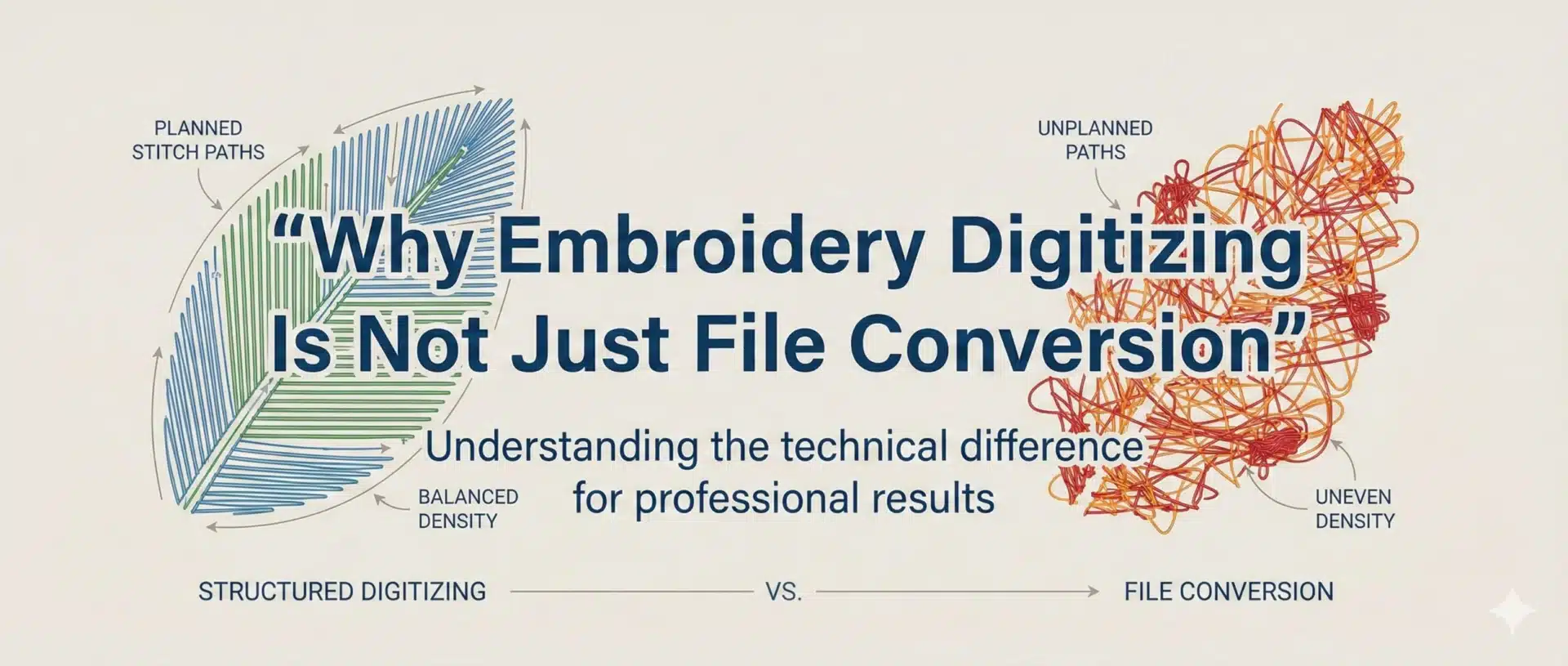
One of the biggest misconceptions in embroidery is that digitizing is simply converting an image into an embroidery file. Many people believe that uploading artwork and exporting a file format like DST or PES completes the digitizing process. In reality, embroidery digitizing is a technical discipline that requires stitch engineering, fabric understanding, and production knowledge.
For embroidery businesses and brands, understanding what digitizing truly involves helps avoid quality issues, production delays, and costly mistakes. This blog explains why embroidery digitizing is far more than file conversion and why professional manual digitizing matters.
What People Mean by “File Conversion” in Embroidery ?
File conversion is often misunderstood as digitizing.
Converting Artwork Into Machine Formats
File conversion usually refers to changing an image or vector file into an embroidery machine format such as DST, PES, EXP, or JEF. This process focuses only on compatibility, not stitch behavior.
While conversion may create a usable file, it does not guarantee embroidery quality.
Why Converted Files Often Fail in Production ?
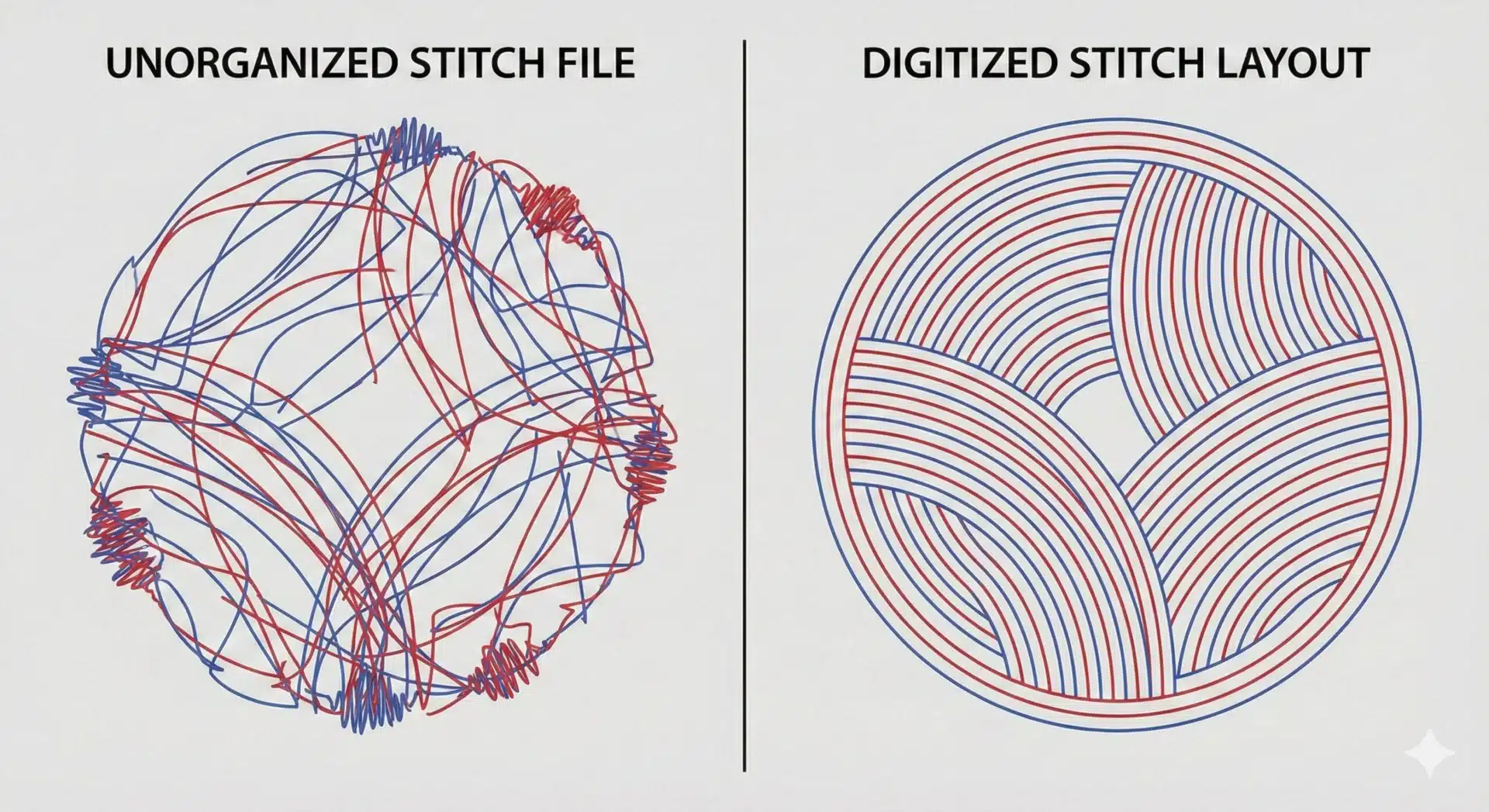
Converted files frequently ignore stitch direction, density balance, underlay planning, and fabric behavior. As a result, embroidery may look distorted, cause thread breaks, or fail during production.
What Real Embroidery Digitizing Actually Involves ?
Professional digitizing is a technical process, not a software shortcut.
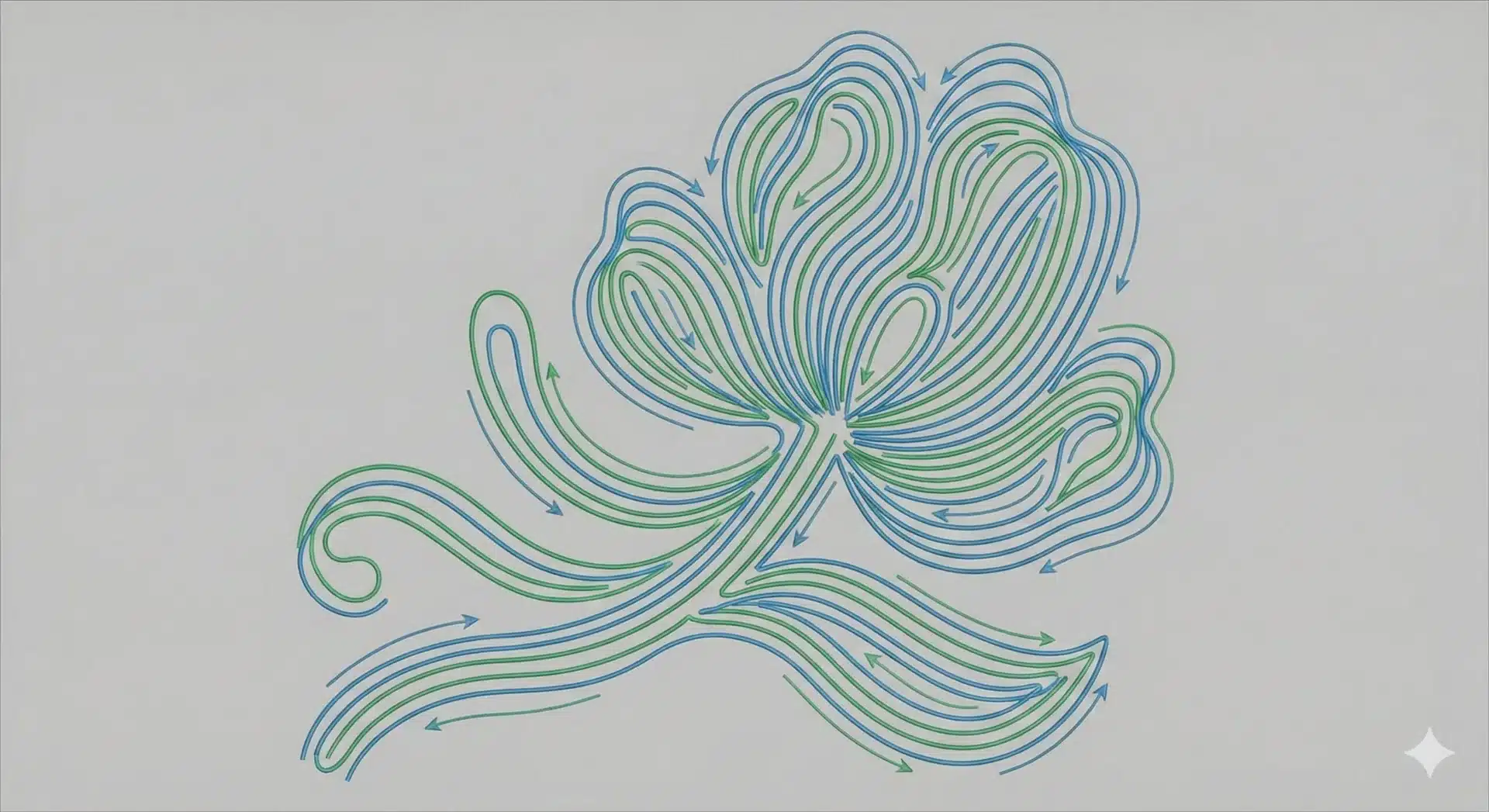
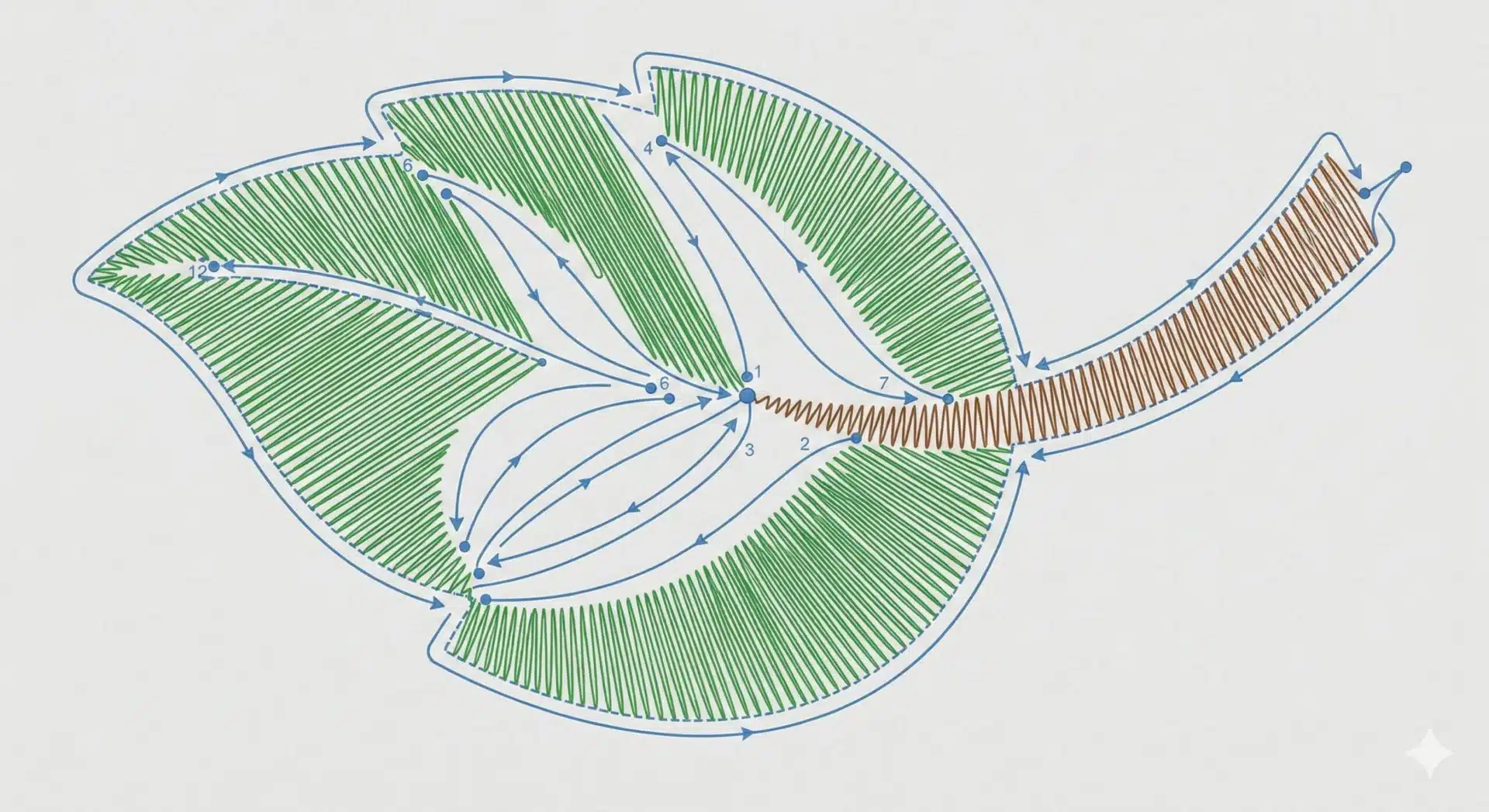
Stitch Planning and Direction Control
Every stitch is intentionally planned. Stitch direction controls how light reflects, how fabric pulls, and how shapes are formed. Poor stitch planning leads to uneven texture and distorted embroidery.
Professional digitizing uses stitch direction to enhance clarity and consistency.
Density Engineering for Stability
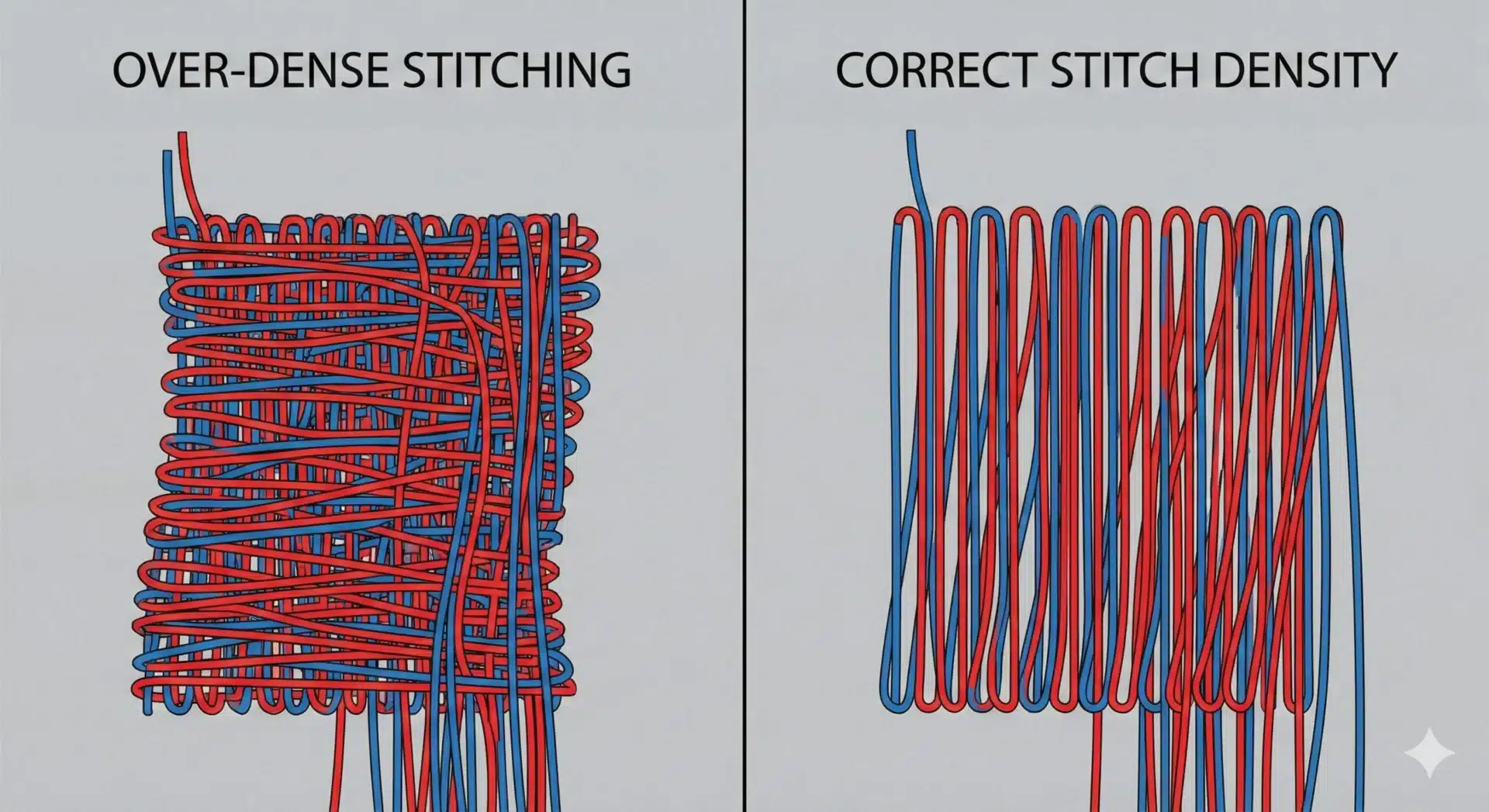
Density determines how tightly stitches are placed. Too much density causes stiffness and thread breaks, while too little density leads to poor coverage.
Digitizing requires careful density balancing based on design and fabric type.
The Role of Underlay in Digitizing
Underlay is a foundational element of embroidery.
Underlay Supports Top Stitches
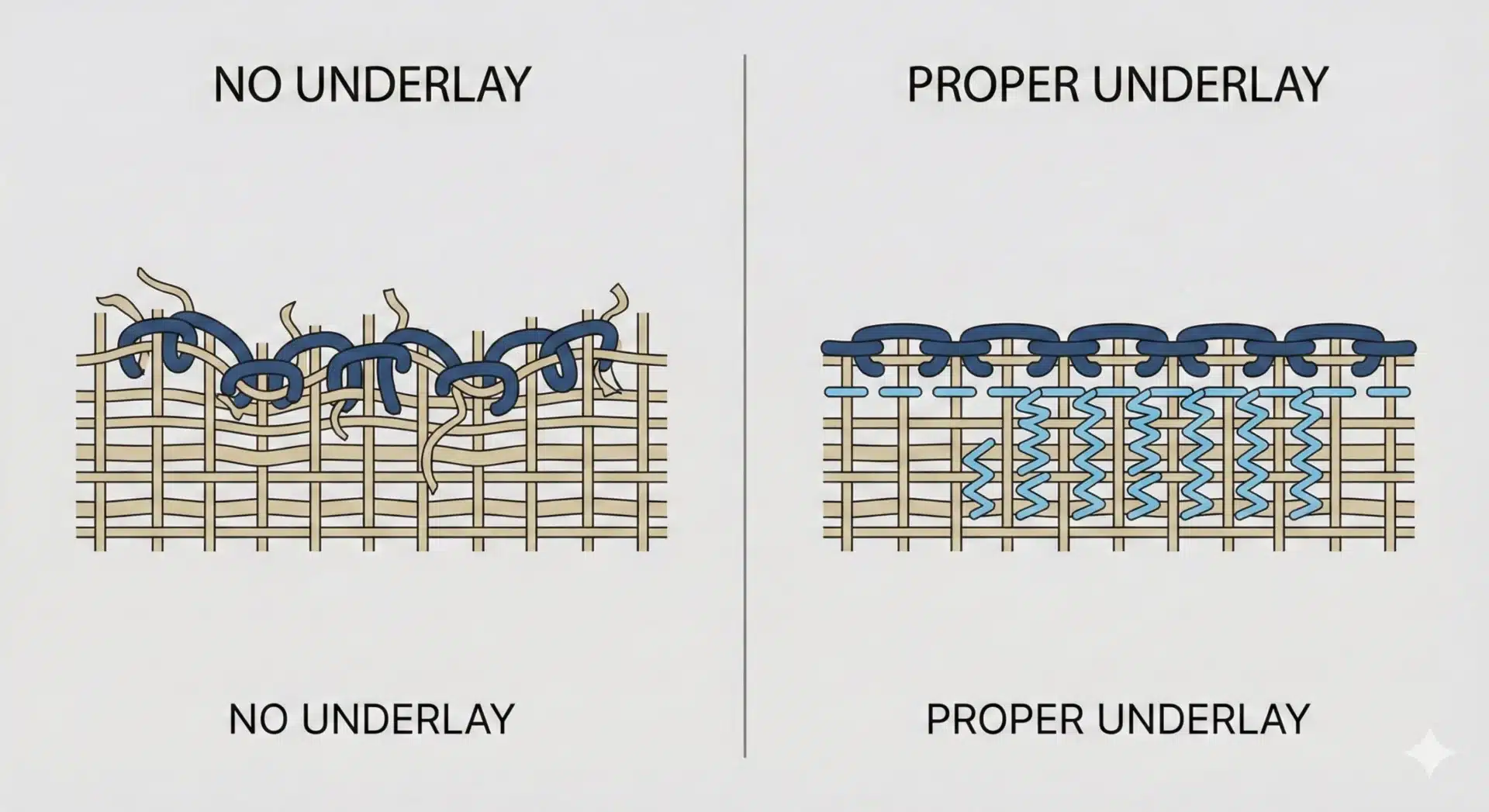
Underlay stitches stabilize fabric and support top stitches, preventing sinking and distortion. Without proper underlay, embroidery loses shape and durability.
Underlay must be planned manually.
Why Underlay Cannot Be Auto-Generated Correctly ?
Automated methods often apply generic underlay that does not match fabric or design requirements. Manual digitizing adjusts underlay based on stitch type, fabric behavior, and design size.
Fabric Behavior Makes Digitizing More Than Conversion
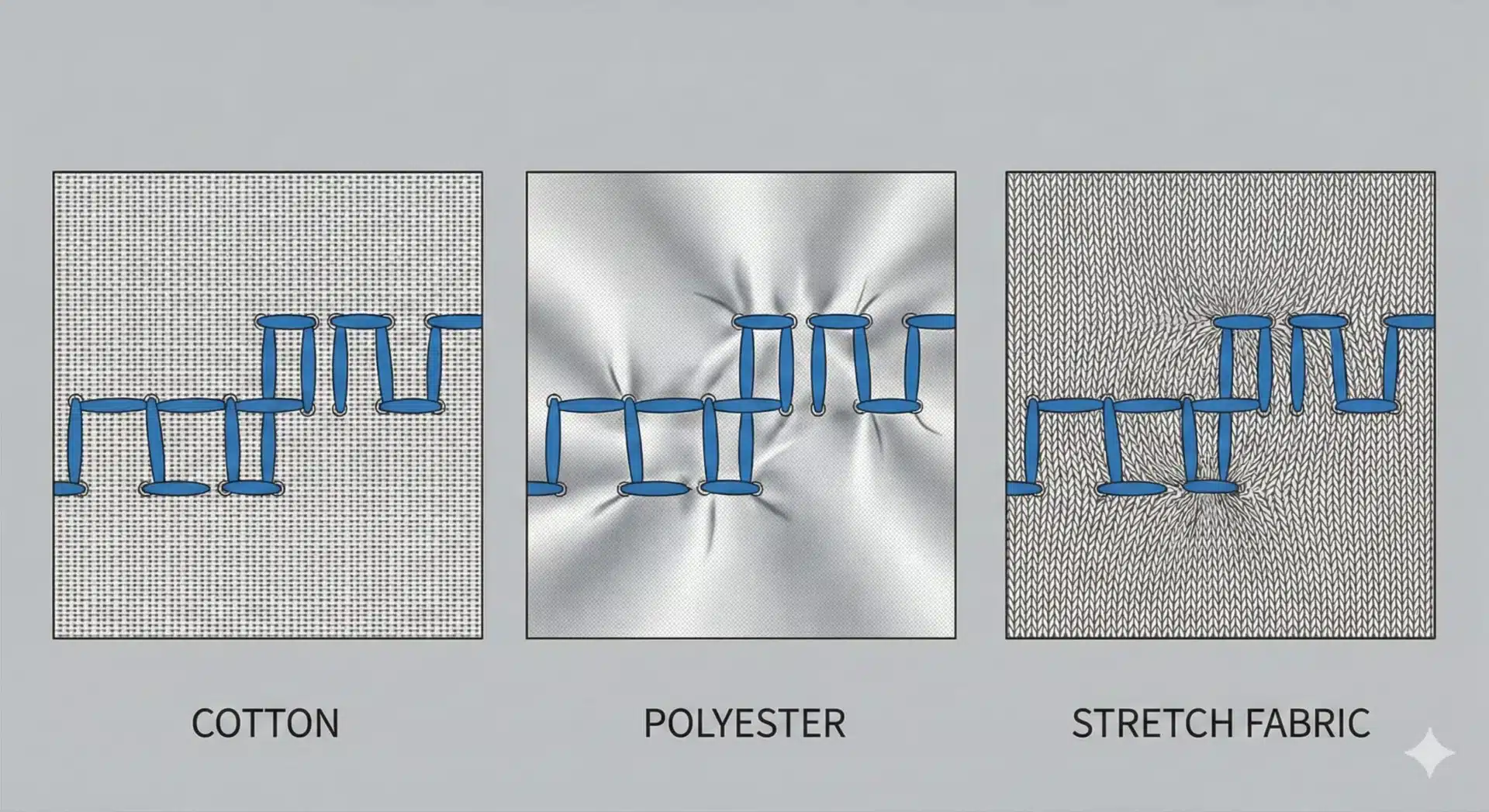
Embroidery reacts differently on different fabrics.
Stitch Behavior Changes With Fabric Type
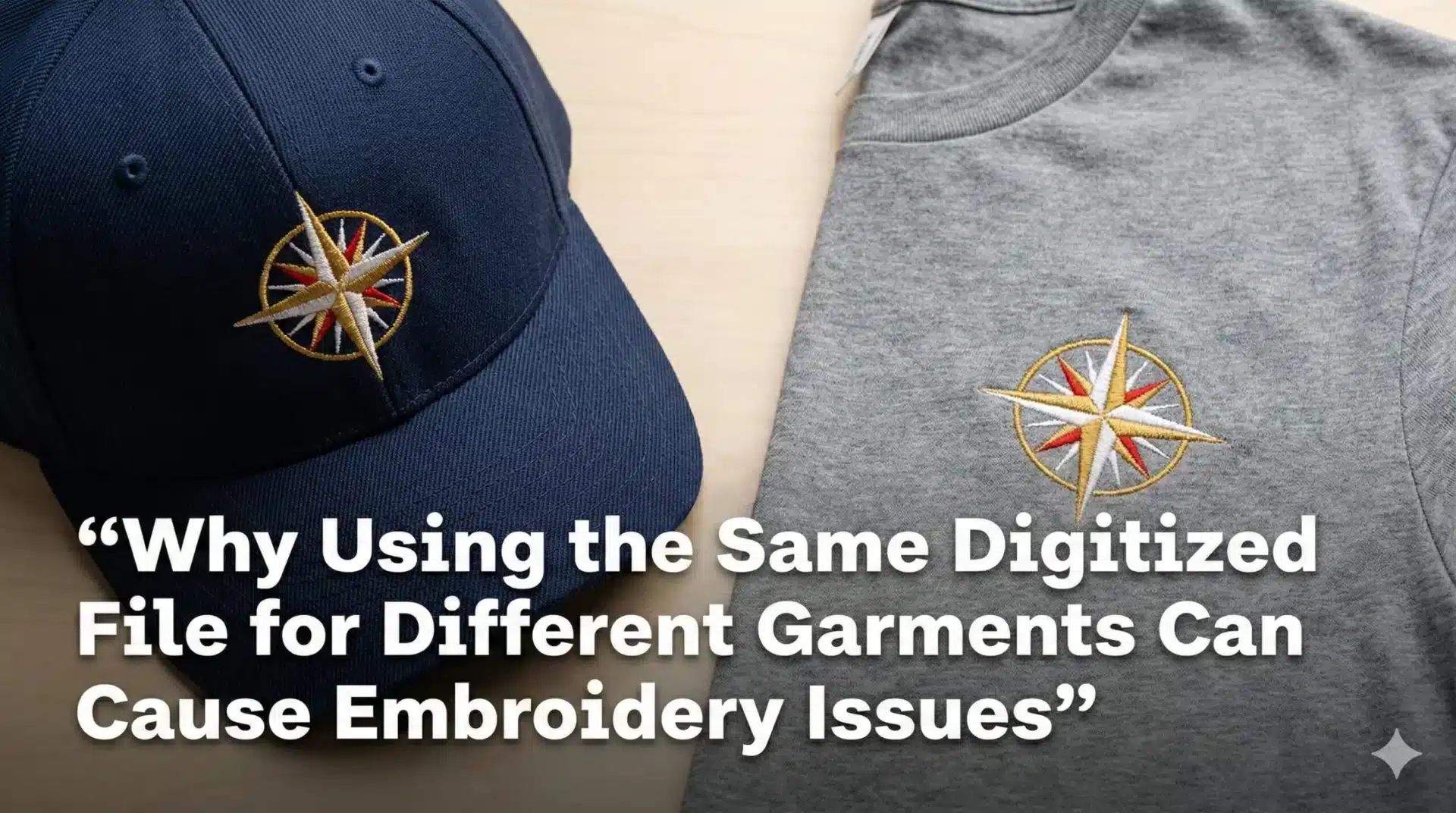
Cotton, polyester, and stretch fabrics respond differently to stitches. Digitizing must account for stretch, thickness, and surface texture to avoid distortion.
File conversion does not consider fabric behavior.
Pull Compensation and Fabric Control
Fabric pulls inward during embroidery. Pull compensation offsets this movement to maintain correct shape and size.
Ignoring pull compensation results in misshaped embroidery.
Why Automated Digitizing Is Not True Digitizing ?
Automation has limitations.
Generic Stitch Structures Create Production Risk
Automated digitizing relies on presets rather than analysis. This results in files that may look acceptable visually but perform poorly on machines.
True digitizing requires decision-making.
Limited Control Over Problem Areas
When issues appear, automated files are harder to fix. Manual digitizing allows precise adjustments to problem areas without rebuilding the entire design.
Professional control improves reliability.
How Professional Manual Digitizing Improves Production ?
Digitizing affects real embroidery output.
Smoother Machine Performance
Properly digitized files reduce thread breaks, trims, and machine stops. This improves production speed and consistency.
Machine stability saves time and cost.
Reduced Revisions and Rework
Files engineered correctly from the start require fewer revisions. This minimizes production delays and material waste.
Why EmbroiPlanet Treats Digitizing as Stitch Engineering ?
EmbroiPlanet follows professional digitizing standards.
100% Manual Embroidery Digitizing
Every design is digitized manually with attention to stitch structure, fabric behavior, and production requirements. No automated shortcuts are used.
Production-Focused Quality Approach
Digitizing decisions are made based on how the design will run on machines, not just how it looks on screen.
You can contact EmbroiPlanet through:
Email – [email protected]
Instagram Direct Message – https://www.instagram.com/embroiplanet
Final Thoughts on Digitizing vs File Conversion
Embroidery digitizing is not a simple file conversion process—it is stitch engineering that determines embroidery quality, stability, and durability. Converting artwork without proper digitizing leads to production issues and increased costs.
Professional manual digitizing ensures that embroidery files perform reliably under real production conditions. EmbroiPlanet focuses on digitizing solutions that prioritize quality, consistency, and long-term production success.
Why Using the Same Digitized File for Different Garments Can Cause Embroidery Issues ?
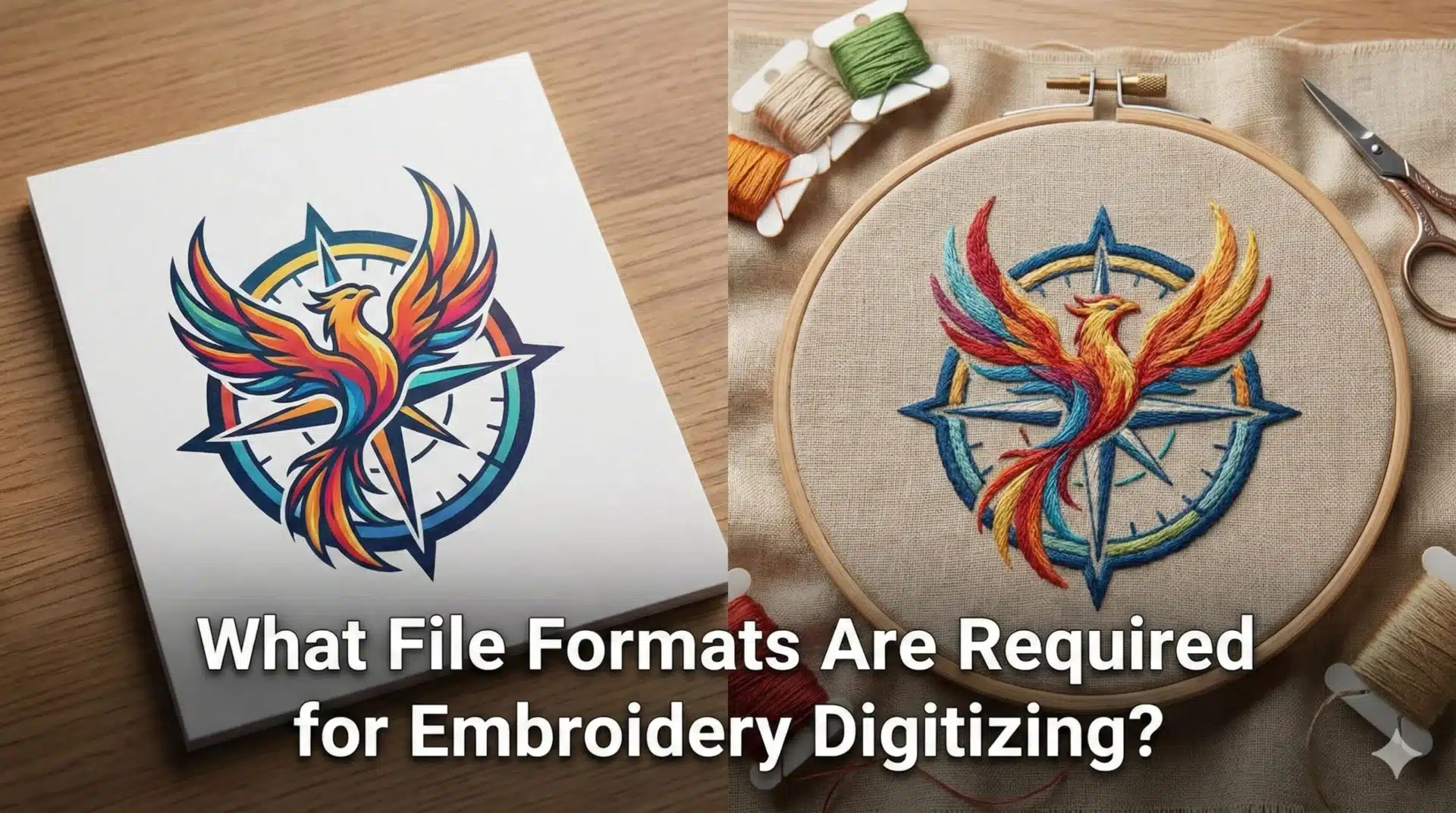
What File Formats Are Required for Embroidery Digitizing?
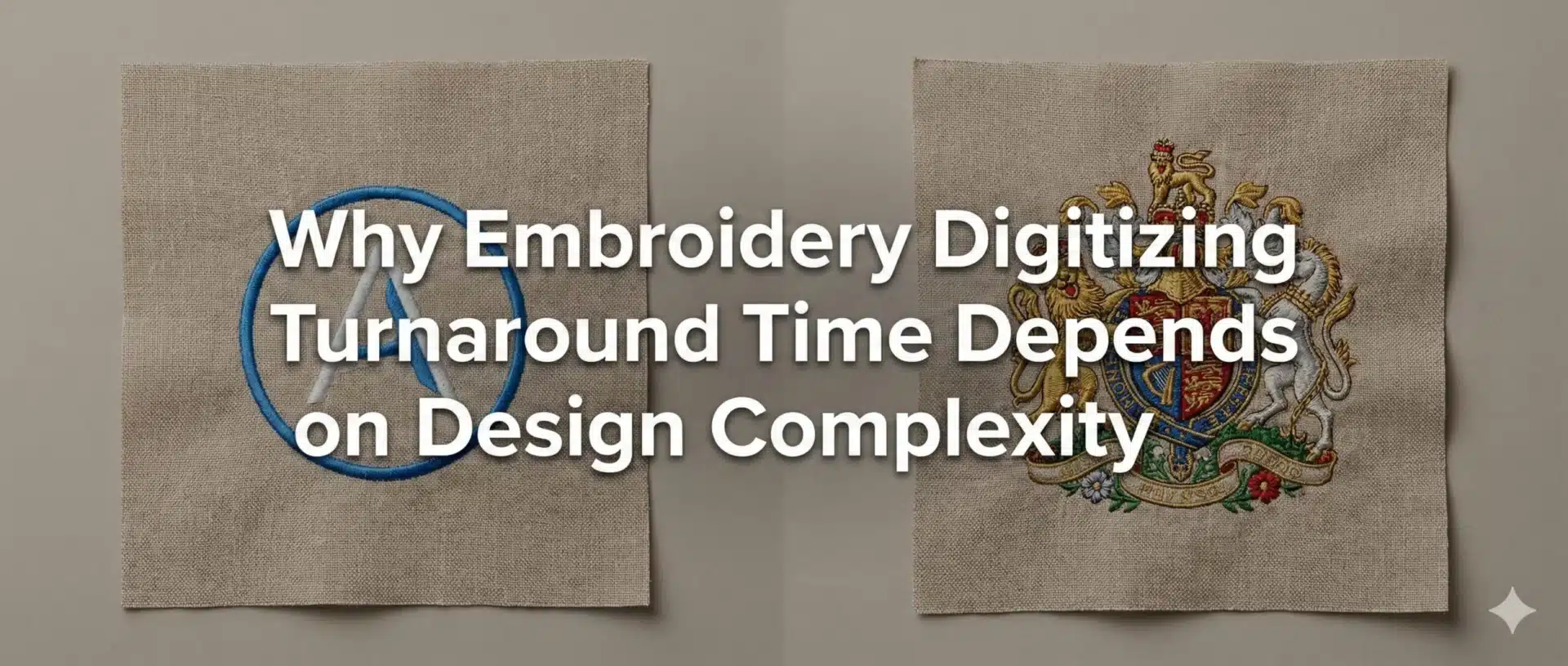
Why Embroidery Digitizing Turnaround Time Depends on Design Complexity ?