






























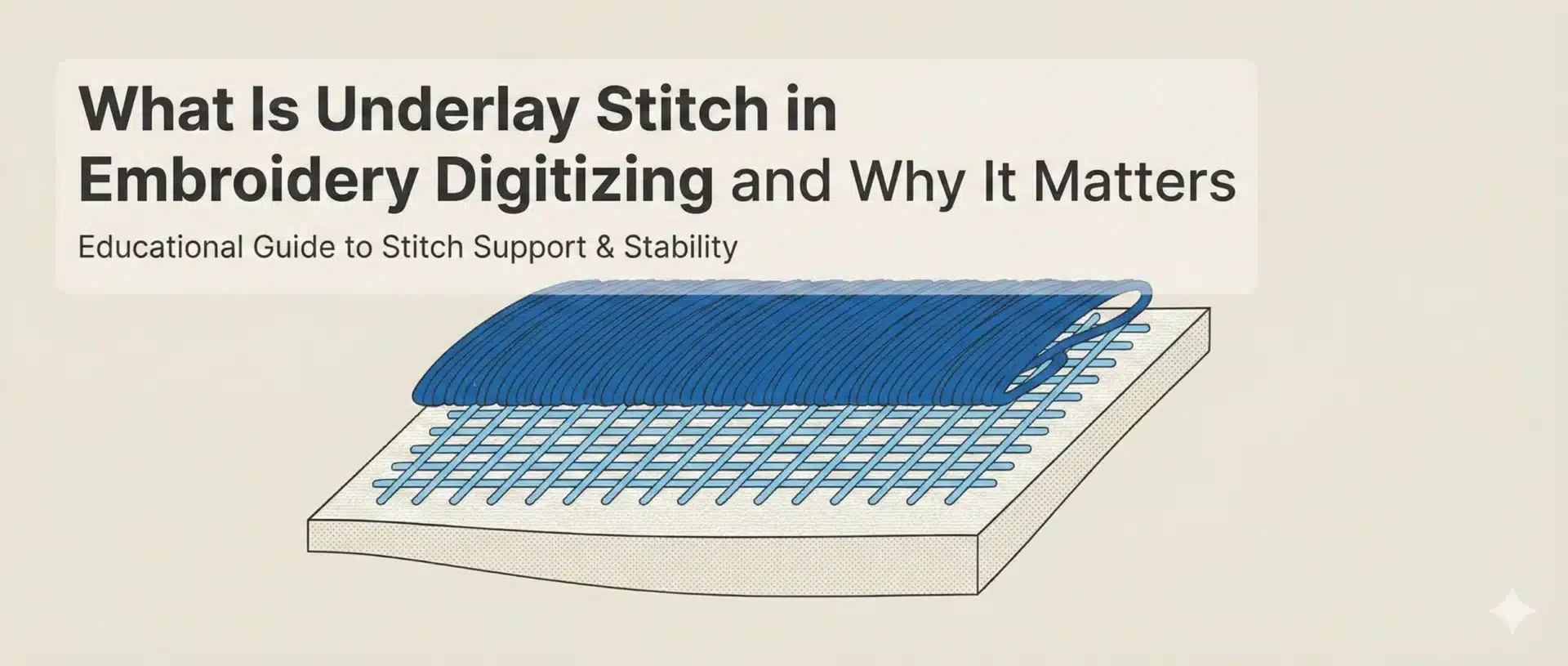
Underlay stitch is one of the most important yet misunderstood elements of embroidery digitizing. Many embroidery problems—such as puckering, uneven coverage, poor durability, and distorted shapes—are often caused not by machines or threads, but by incorrect or missing underlay.
For embroidery businesses, clothing brands, and machine owners, understanding underlay stitches is essential for achieving clean, stable, and professional embroidery results. This blog explains what underlay stitch is, how it works, and why proper underlay planning is critical in manual embroidery digitizing.
What Is Underlay Stitch in Embroidery Digitizing ?
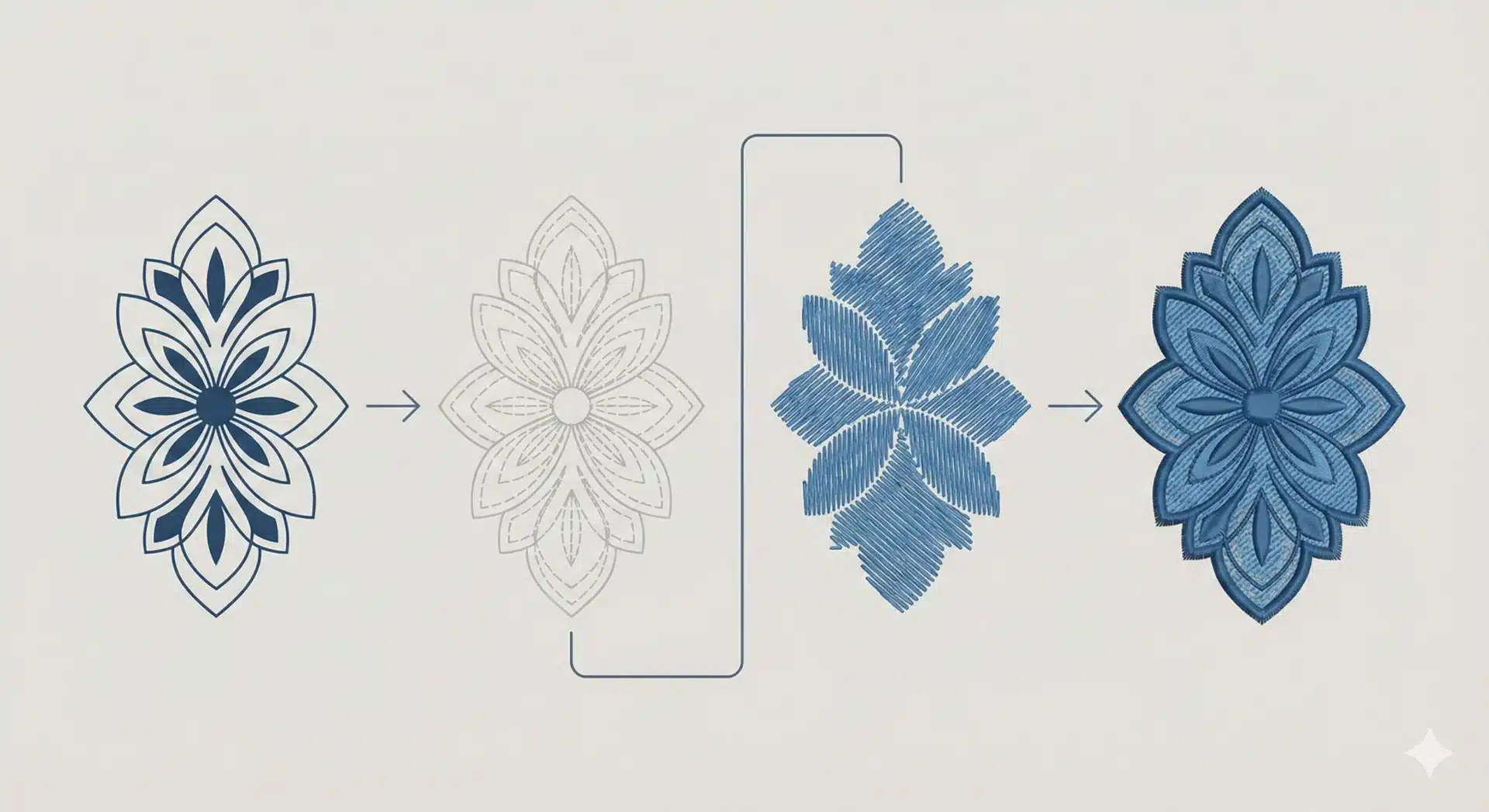
Underlay stitch is the foundation layer of stitches placed beneath the visible top stitches during embroidery.
The Purpose of Underlay Stitches
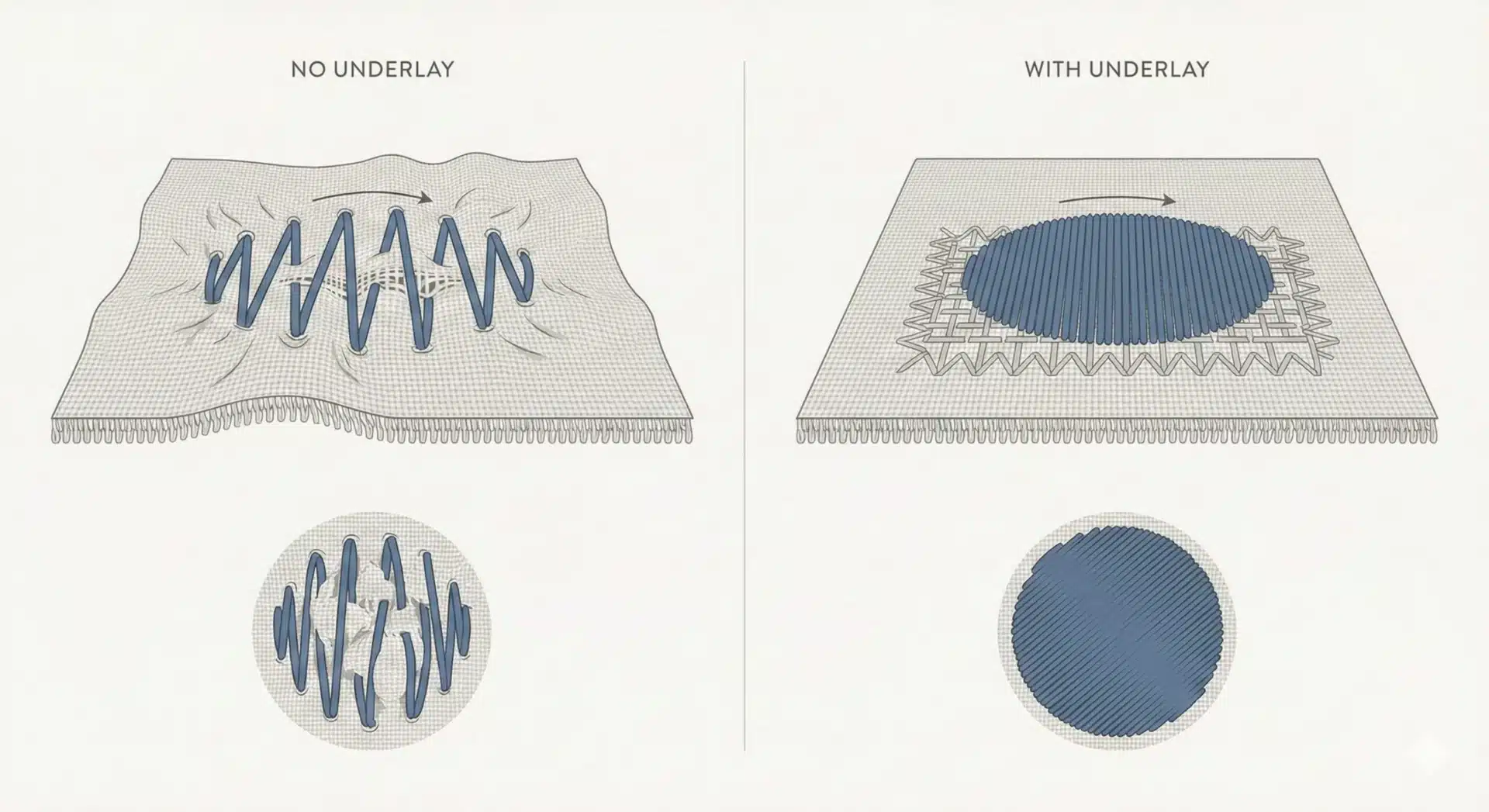
Underlay stitches prepare the fabric before the top stitches are applied. They stabilize the fabric, reduce movement, and create a supportive base that helps top stitches sit evenly on the surface.
Without proper underlay, top stitches may sink into fabric, shift during stitching, or lose shape over time.
Underlay Is Not Visible but Always Felt
Although underlay stitches are usually hidden beneath the top stitches, their effect is clearly visible in the final embroidery quality. Good underlay improves coverage, texture, and durability, while poor underlay causes instability and distortion.
Why Underlay Stitch Is Critical for Embroidery Quality ?
Underlay plays a key role in controlling how embroidery behaves on fabric.
Fabric Stabilization and Control
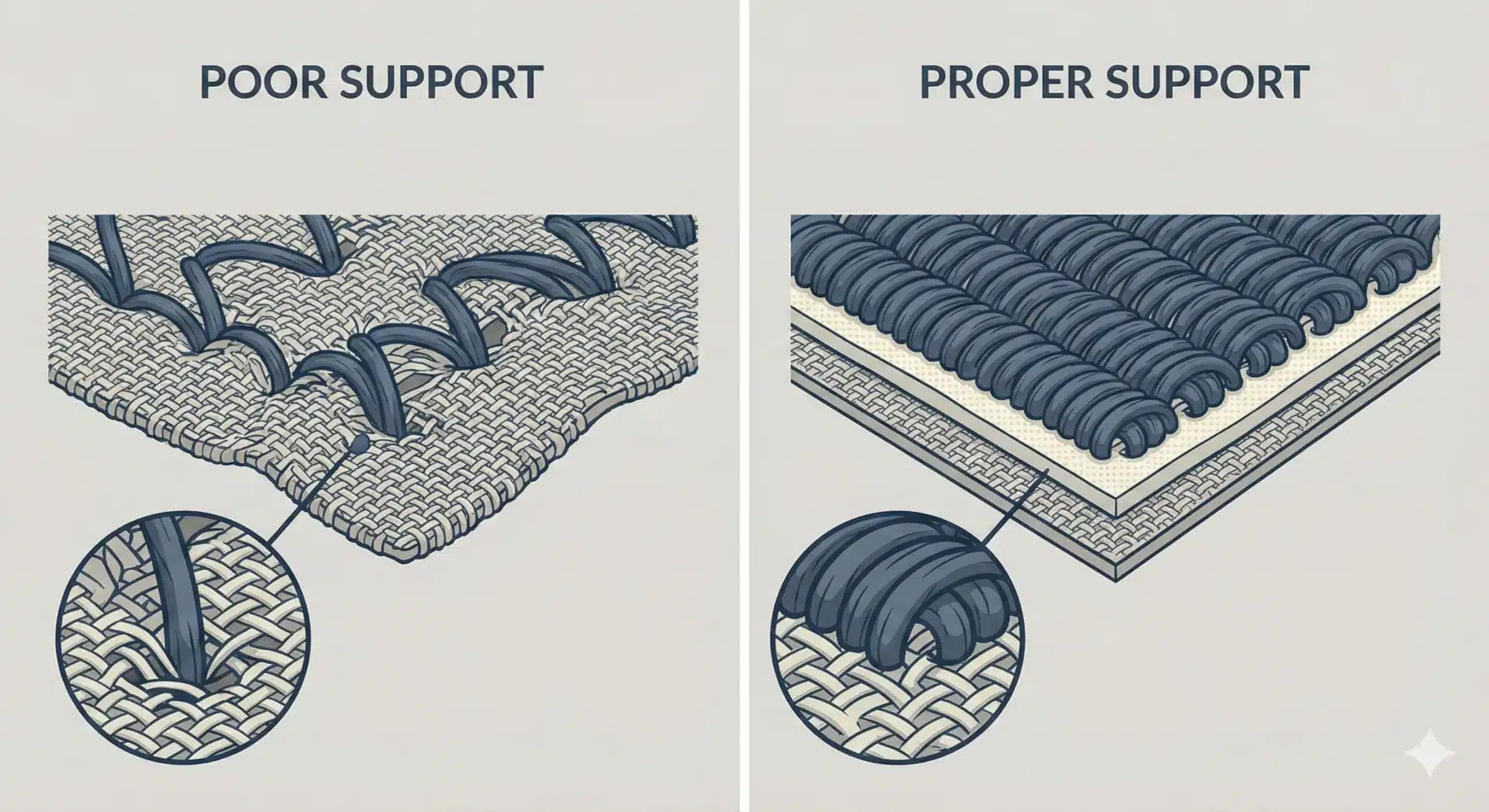
Fabric naturally moves under the needle during embroidery. Underlay stitches anchor the fabric and reduce stretching or pulling, especially on soft or stretch materials.
Proper stabilization prevents puckering and uneven surfaces.
Improving Stitch Coverage and Texture
Underlay lifts top stitches slightly, allowing them to sit evenly on the fabric surface. This improves thread coverage and creates a smoother, more consistent texture.
Without underlay, embroidery may look thin or patchy.
Types of Underlay Stitches Used in Digitizing
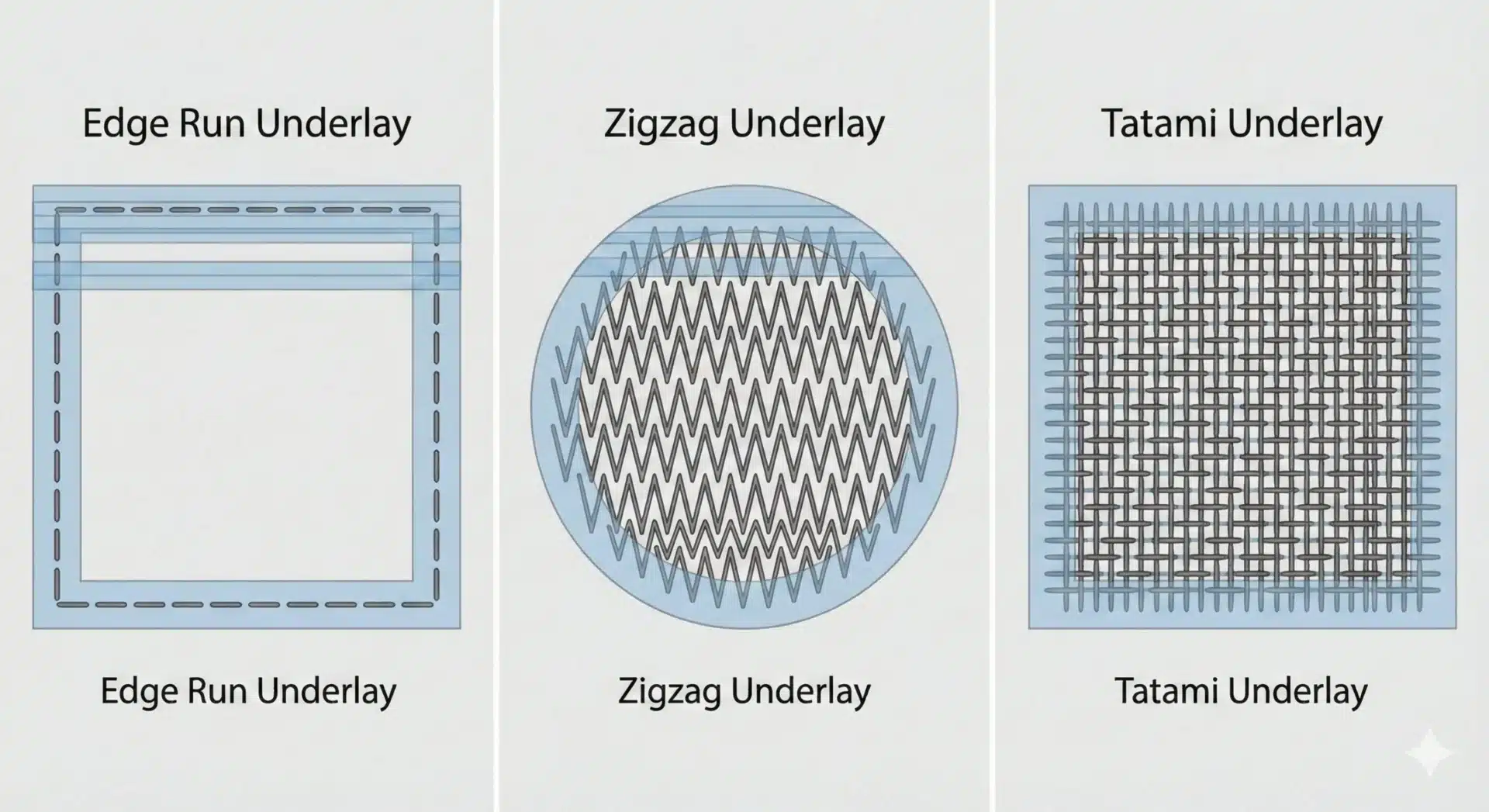
Different underlay types serve different purposes depending on design and fabric.
Edge Run Underlay
Edge run underlay follows the outline of a shape. It helps define edges and reduce distortion, especially for lettering and borders.
This underlay type improves shape accuracy.
Zigzag Underlay
Zigzag underlay provides stronger fabric support by covering a wider area. It is commonly used for larger shapes and satin stitches.
Zigzag underlay helps prevent fabric pull and improves durability.
Tatami or Fill Underlay
Tatami underlay consists of light fill stitches beneath dense fill areas. It stabilizes fabric and supports large embroidered areas.
This underlay type is useful for high-stitch-count designs.
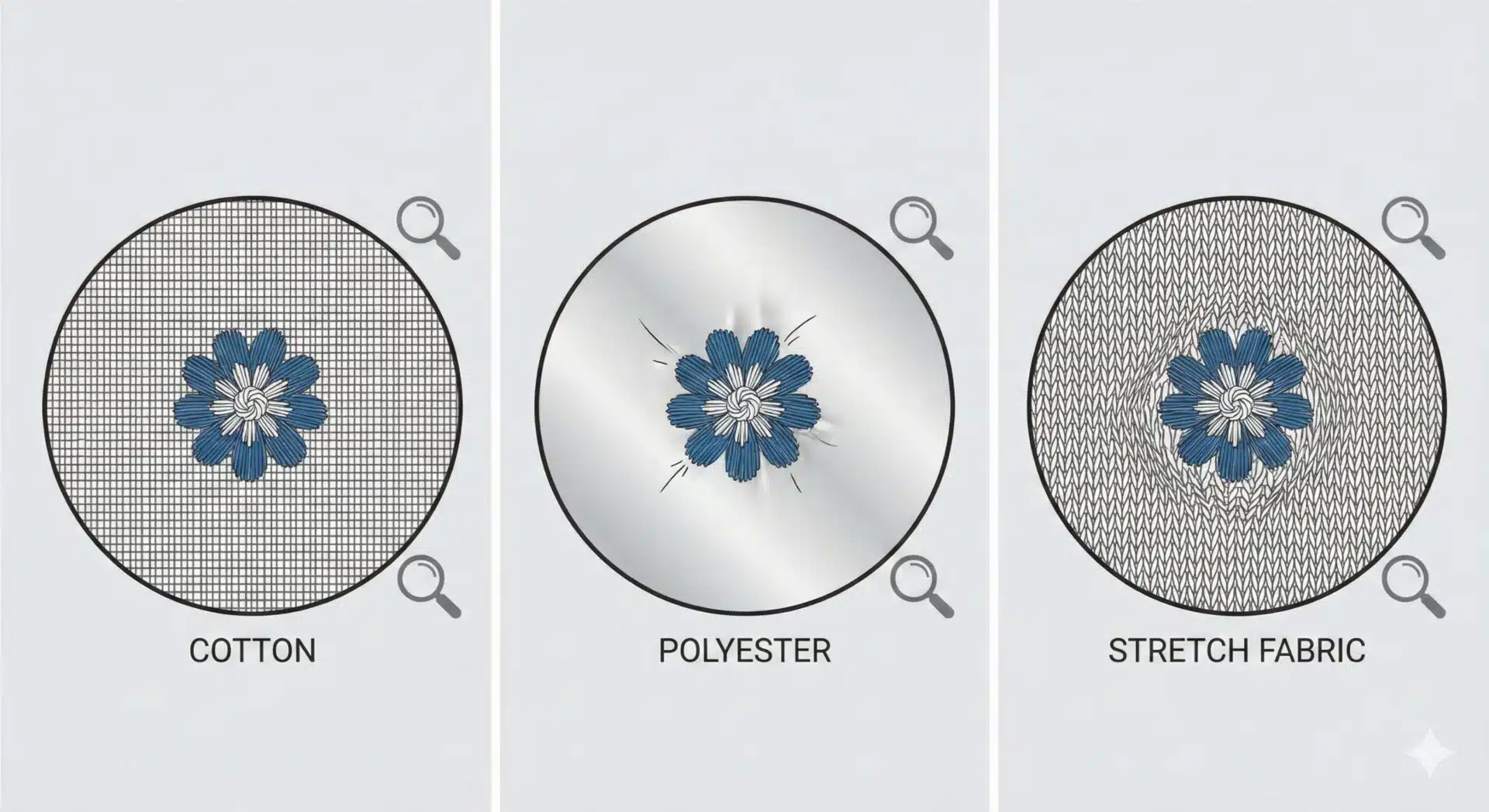
How Fabric Type Affects Underlay Decisions ?
Underlay planning must consider fabric behavior.
Underlay for Stable Fabrics (Cotton, Canvas)
Stable fabrics require lighter underlay since they do not stretch significantly. Excessive underlay on stable fabrics can make embroidery stiff.
Balanced underlay improves comfort and appearance.
Underlay for Stretch and Soft Fabrics
Stretch fabrics require stronger underlay to control movement. Additional stabilization prevents distortion and shape loss during stitching.
Ignoring fabric behavior leads to embroidery failure.
Common Problems Caused by Poor Underlay
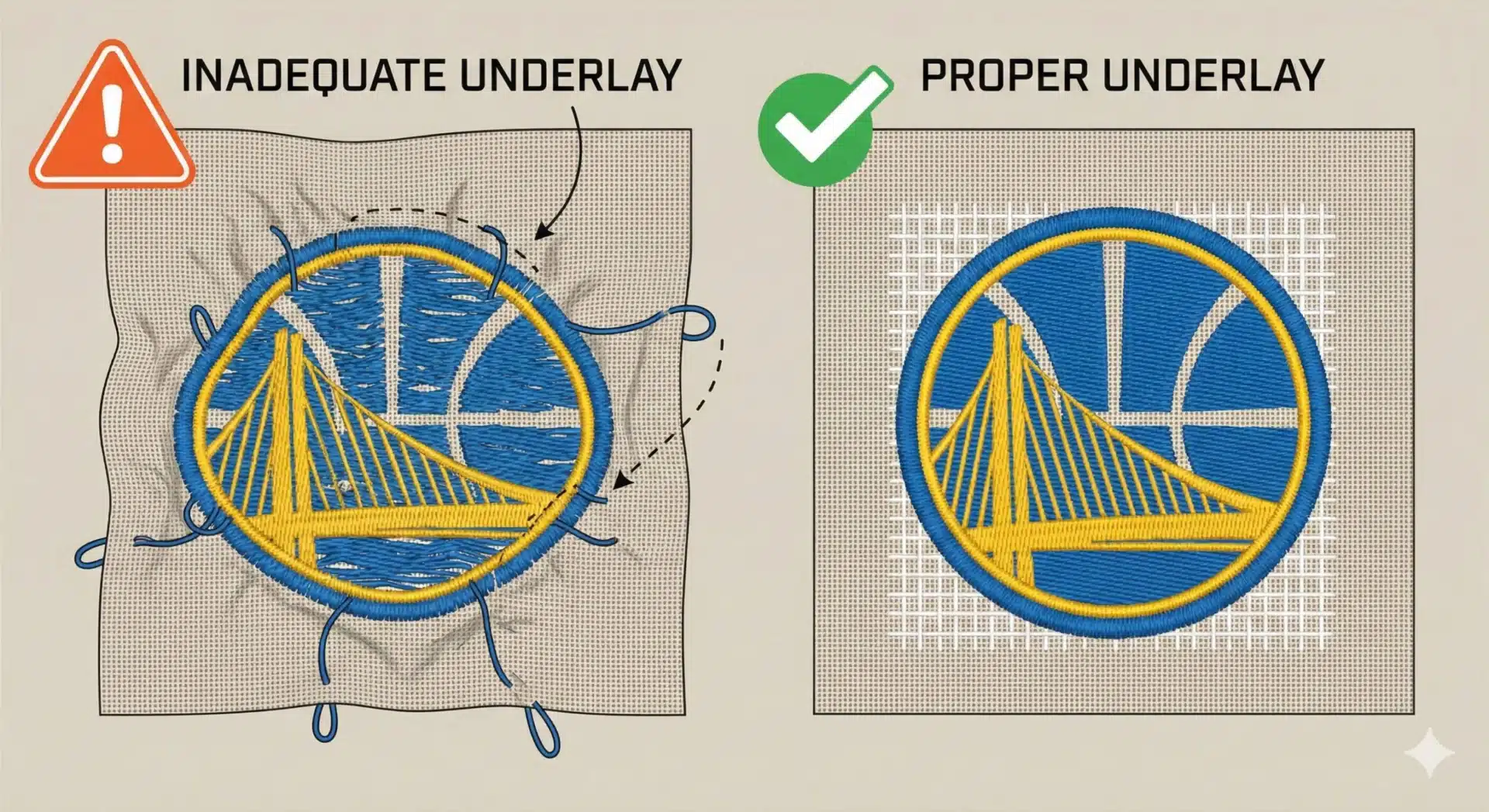
Many embroidery issues trace back to underlay mistakes.
Fabric Puckering and Shrinkage
Insufficient or incorrect underlay allows fabric to pull inward, causing puckering around the design.
This problem is especially visible after washing.
Uneven Stitch Coverage
Without proper underlay, top stitches may sink or separate, creating visible gaps and inconsistent coverage.
This reduces perceived embroidery quality.
Reduced Durability Over Time
Poor underlay weakens stitch structure. Embroidery may loosen or deform after repeated wear and washing.
Why Underlay Planning Requires Manual Digitizing ?
Underlay cannot be correctly generated using automated shortcuts.
Fabric-Specific Stitch Engineering
Manual digitizing allows underlay adjustments based on fabric type, stitch density, and design complexity.
Automated methods often apply generic underlay, leading to inconsistent results.
Balancing Underlay With Density and Stitch Direction
Professional digitizers balance underlay with top stitch density to avoid stiffness while maintaining stability.
This balance requires experience and technical understanding.
How EmbroiPlanet Approaches Underlay Stitch Planning ?
EmbroiPlanet follows a quality-first digitizing workflow.
Custom Underlay for Each Design
Every design is analyzed individually, and underlay is planned based on fabric, size, and stitch type.
No template-based shortcuts are used.
Production-Focused Quality Control
Underlay is reviewed alongside density and stitch direction to ensure smooth embroidery performance and durability.
Contact Methods
You can contact EmbroiPlanet via:
You can contact EmbroiPlanet through:
Email – [email protected]
Instagram Direct Message – https://www.instagram.com/embroiplanet
Final Thoughts on Underlay Stitch in Embroidery Digitizing
Underlay stitch is the foundation of successful embroidery. While it remains hidden beneath top stitches, its impact on stability, appearance, and durability is significant.
Understanding underlay helps embroidery businesses make better digitizing decisions and avoid common production issues. Professional manual digitizing ensures that underlay is engineered correctly for each design and fabric type. EmbroiPlanet provides embroidery digitizing services focused on precision, stability, and long-term production performance.

Why Using the Same Digitized File for Different Garments Can Cause Embroidery Issues ?

What File Formats Are Required for Embroidery Digitizing?
Why Embroidery Digitizing Turnaround Time Depends on Design Complexity ?