






























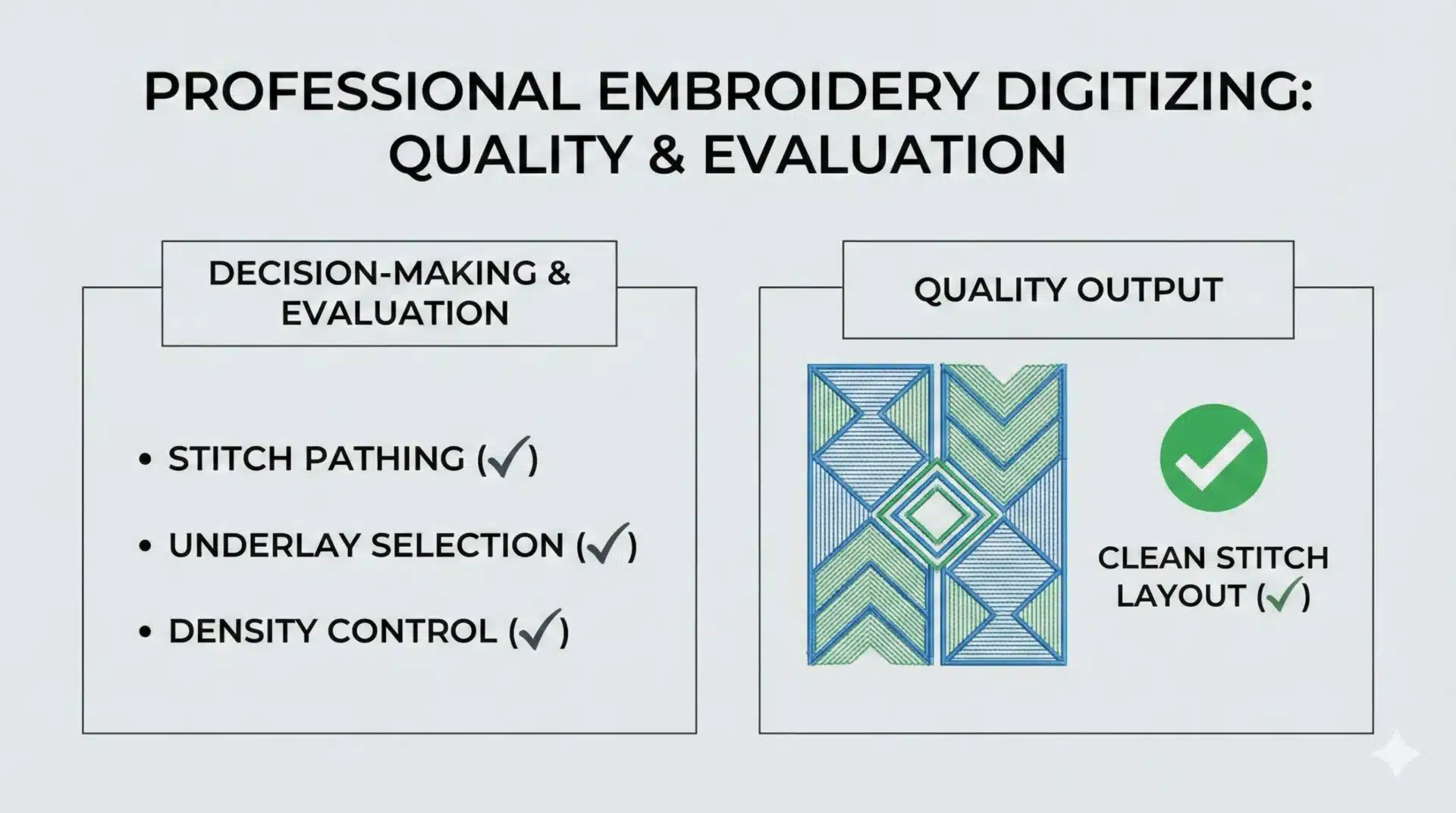
Choosing the right embroidery digitizing service is a critical decision for embroidery businesses, clothing brands, and production units. The quality of digitizing directly affects embroidery performance, production efficiency, and final product appearance. A poor choice can lead to repeated revisions, machine downtime, and wasted materials.
This blog explains how to evaluate embroidery digitizing services properly and what factors truly matter when selecting a long-term digitizing partner.
Why Choosing the Right Digitizing Service Matters ?
Digitizing is not just file conversion—it is technical stitch engineering.
Digitizing Directly Affects Production Performance
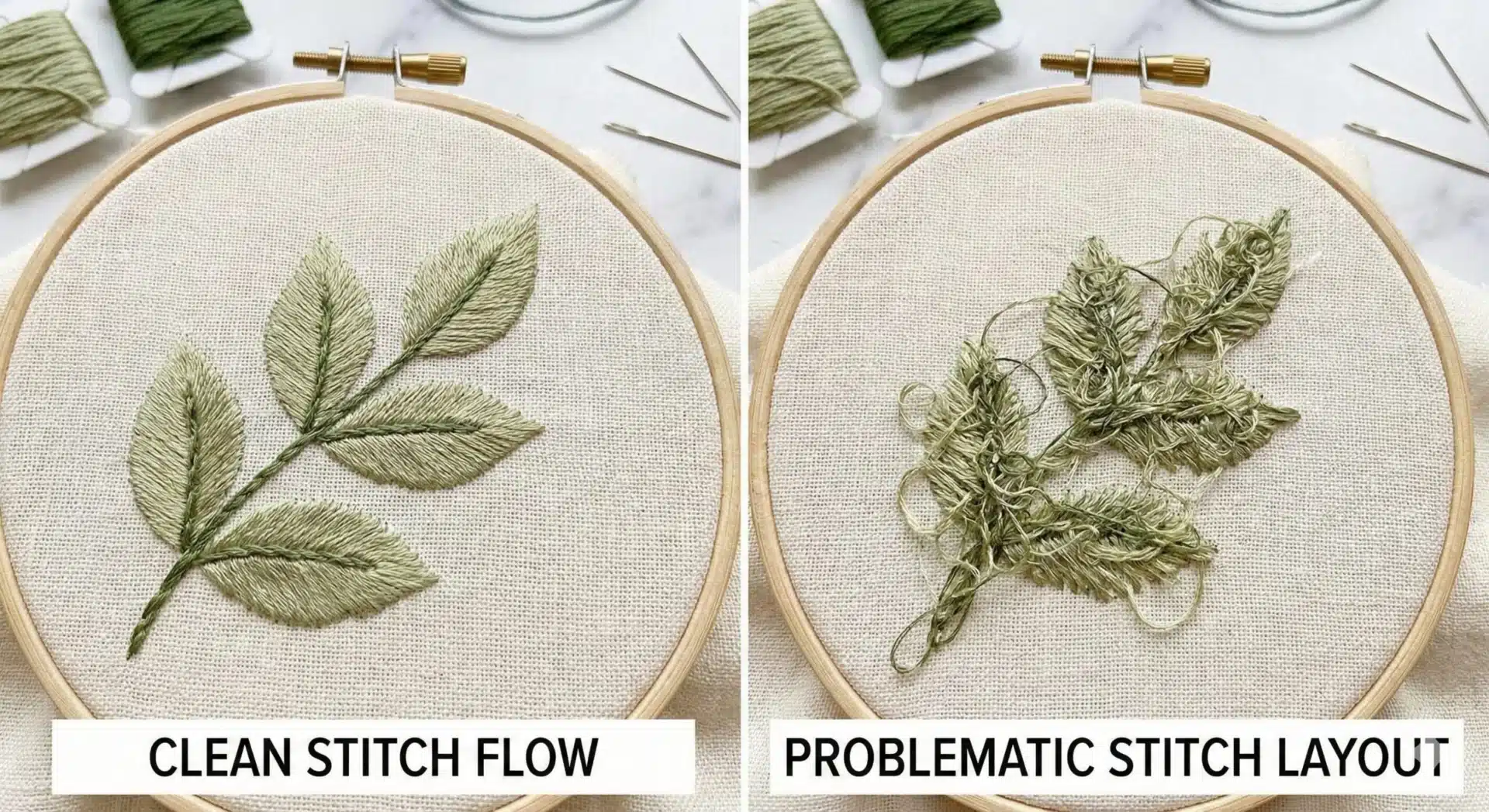
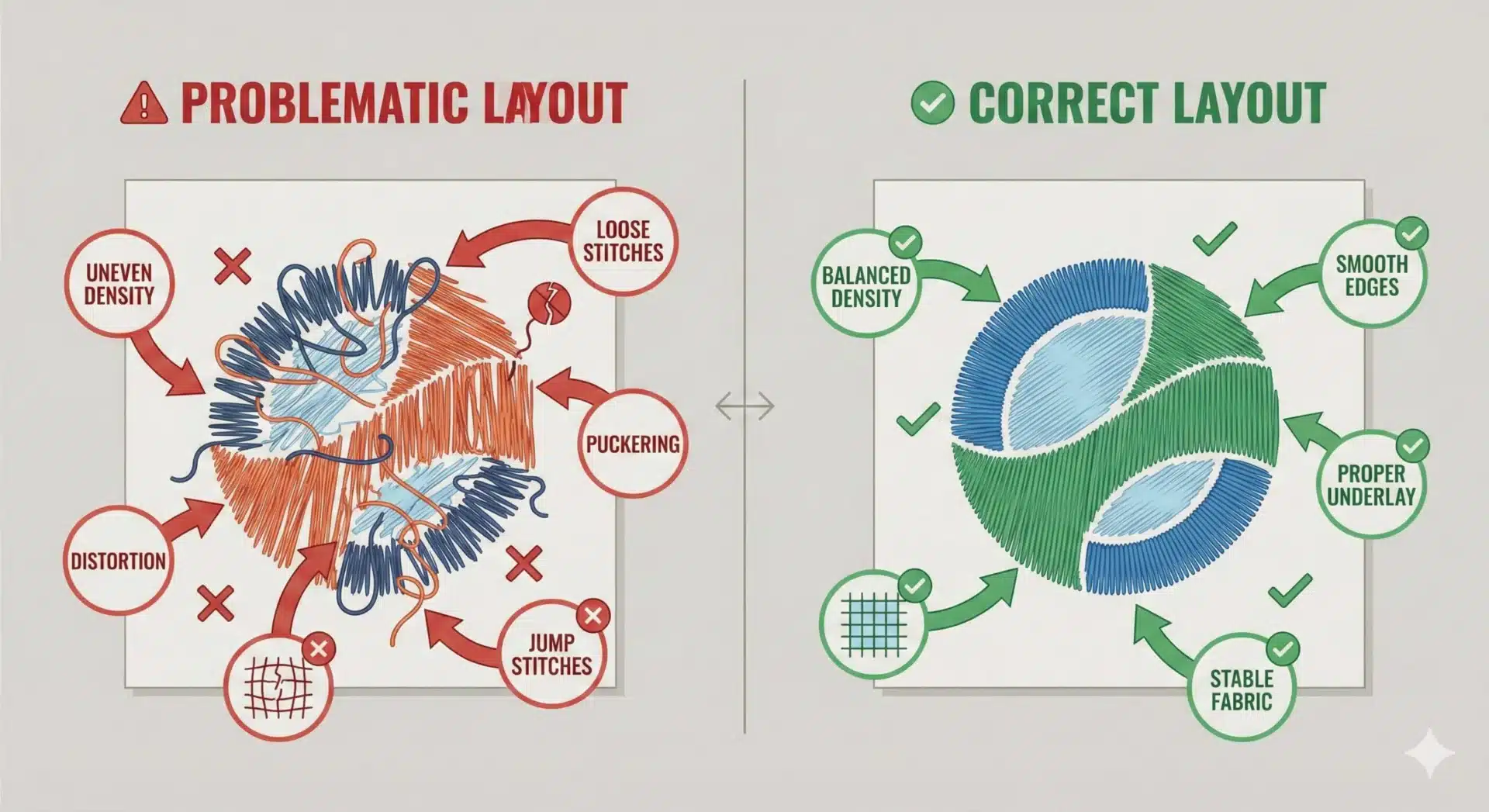
Every embroidery file controls stitch direction, density, underlay, and sequencing. Poor digitizing leads to thread breaks, fabric distortion, and inconsistent results during embroidery.
Choosing a reliable digitizing service reduces production risks and ensures smoother machine operation.
Long-Term Impact on Cost and Efficiency
A well-digitized design reduces revisions, prevents waste, and speeds up production. Over time, this saves more money than repeatedly fixing poor-quality files.
Digitizing quality should be evaluated as a production investment, not a one-time expense.
Key Factors to Look for in an Embroidery Digitizing Service
Not all digitizing services follow professional standards.
Manual Digitizing vs Automated Methods
Professional services rely on manual digitizing, where stitches are planned by experienced digitizers. Automated or template-based methods often ignore fabric behavior and production conditions.
Manual digitizing delivers better stitch stability and consistency.
Understanding of Stitch Density and Underlay
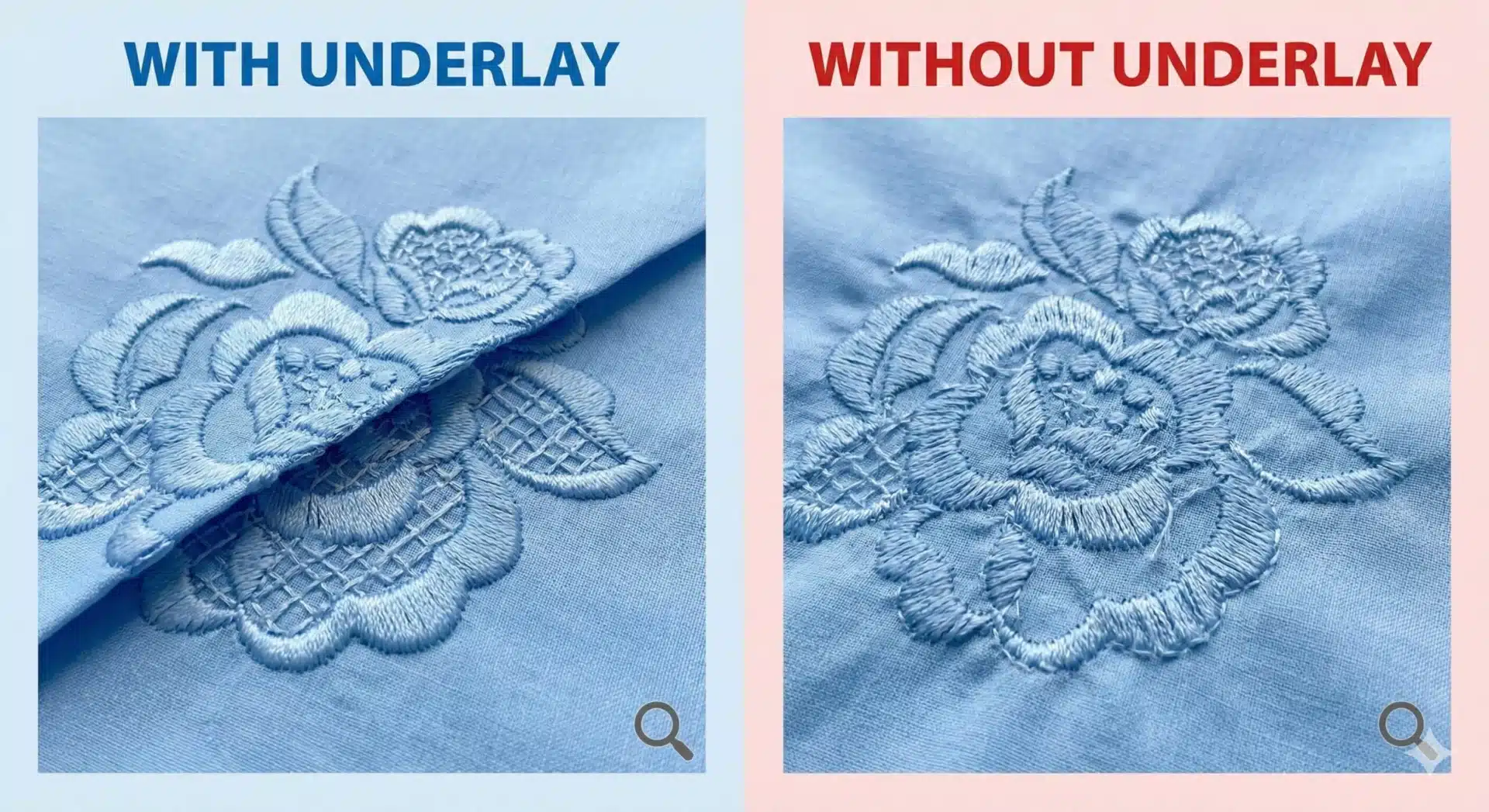
A reliable digitizing service carefully balances stitch density to avoid stiffness and thread breaks. Underlay stitches are planned to stabilize fabric and support top stitches.
Services that overlook these fundamentals often produce unstable embroidery files.
Experience With Different Design Types and Complexity
Not all designs behave the same during embroidery.
Handling Small Text and Fine Details
Small lettering and fine details require precise stitch control. Poor digitizing causes letters to merge or lose clarity.
Experienced digitizers adjust stitch angles, spacing, and density to preserve readability.
Managing Large and Complex Designs
Large designs require careful stitch sequencing to prevent excessive trims and thread buildup. Professional digitizers plan stitch paths to maintain smooth embroidery flow.
Complex designs should never be rushed.
Fabric Awareness and Production Knowledge
Good digitizing services understand how fabric affects stitches.
Digitizing for Different Fabric Types
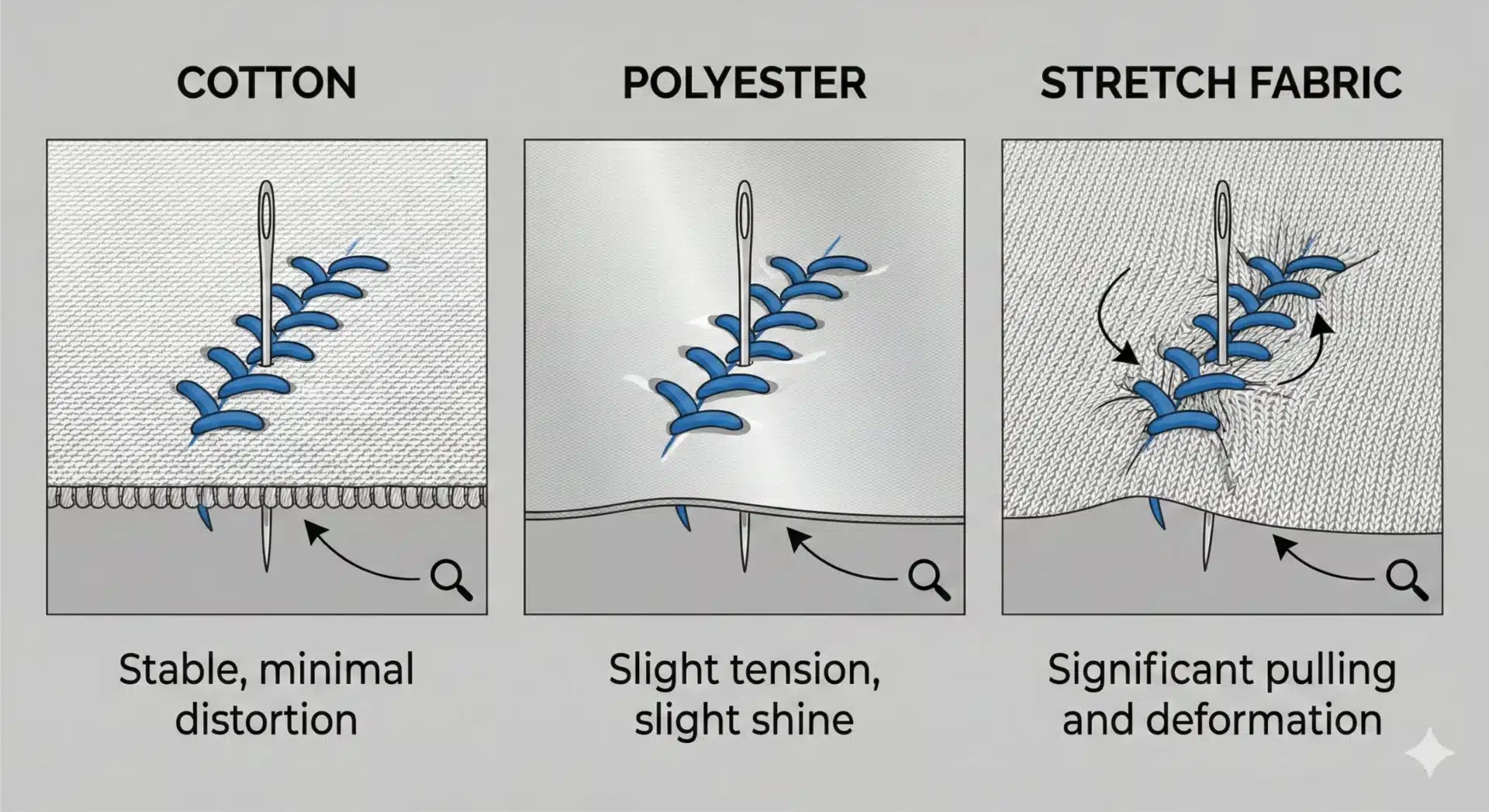
Cotton, polyester, and stretch fabrics all react differently to stitches. Professional digitizers adjust stitch structure based on fabric stretch, thickness, and surface texture.
Ignoring fabric behavior results in distortion and puckering.
Adapting Files for Different Applications
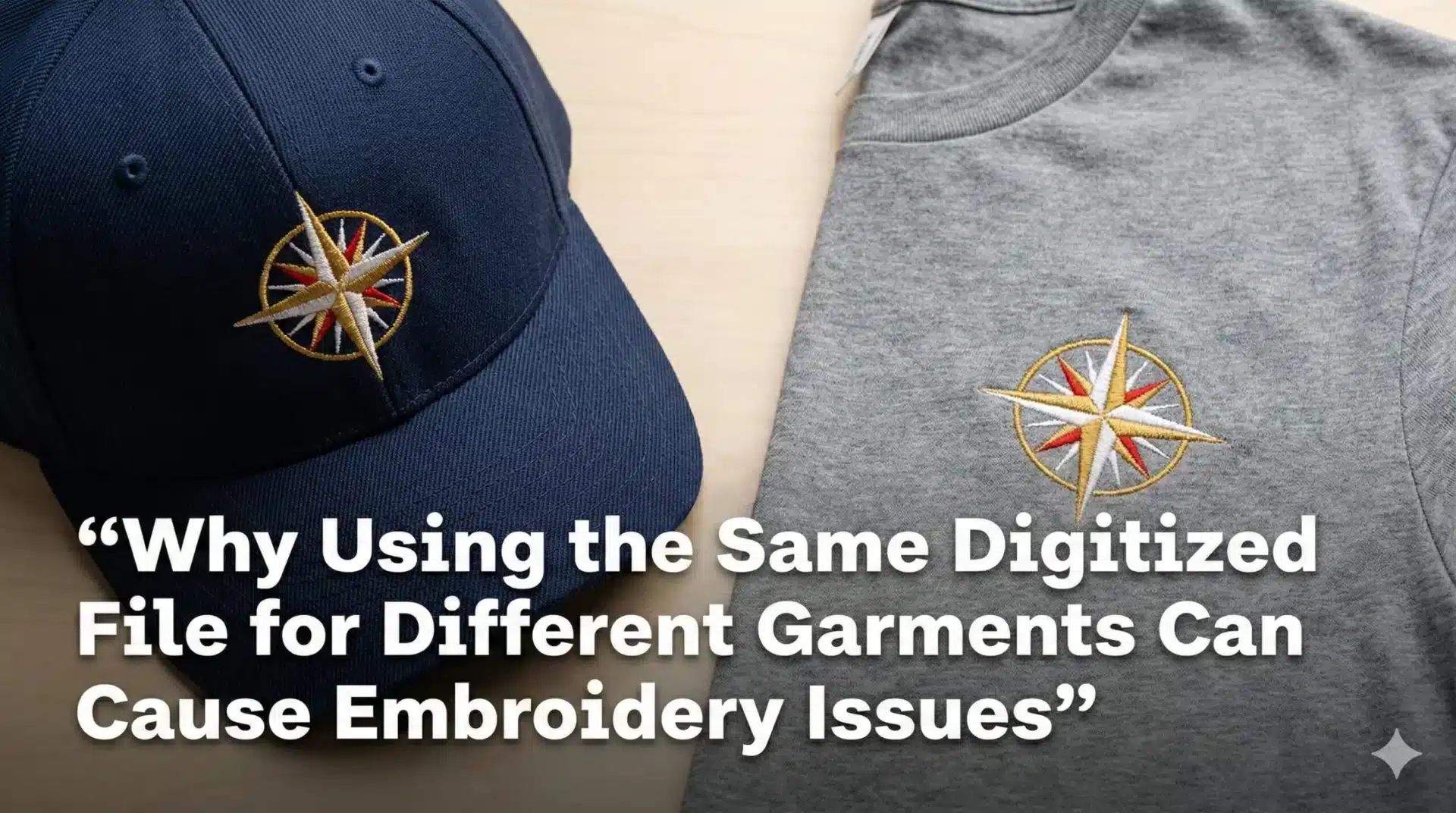
A design digitized for caps may not perform well on garments or bags. Reliable services customize digitizing for each application instead of using one generic file.
Revision Policy and Communication Standards
Clear communication is a sign of professionalism.
Clear Communication and Expectations
Good services explain what is possible and what may cause issues. Honest communication prevents unrealistic expectations and production delays.
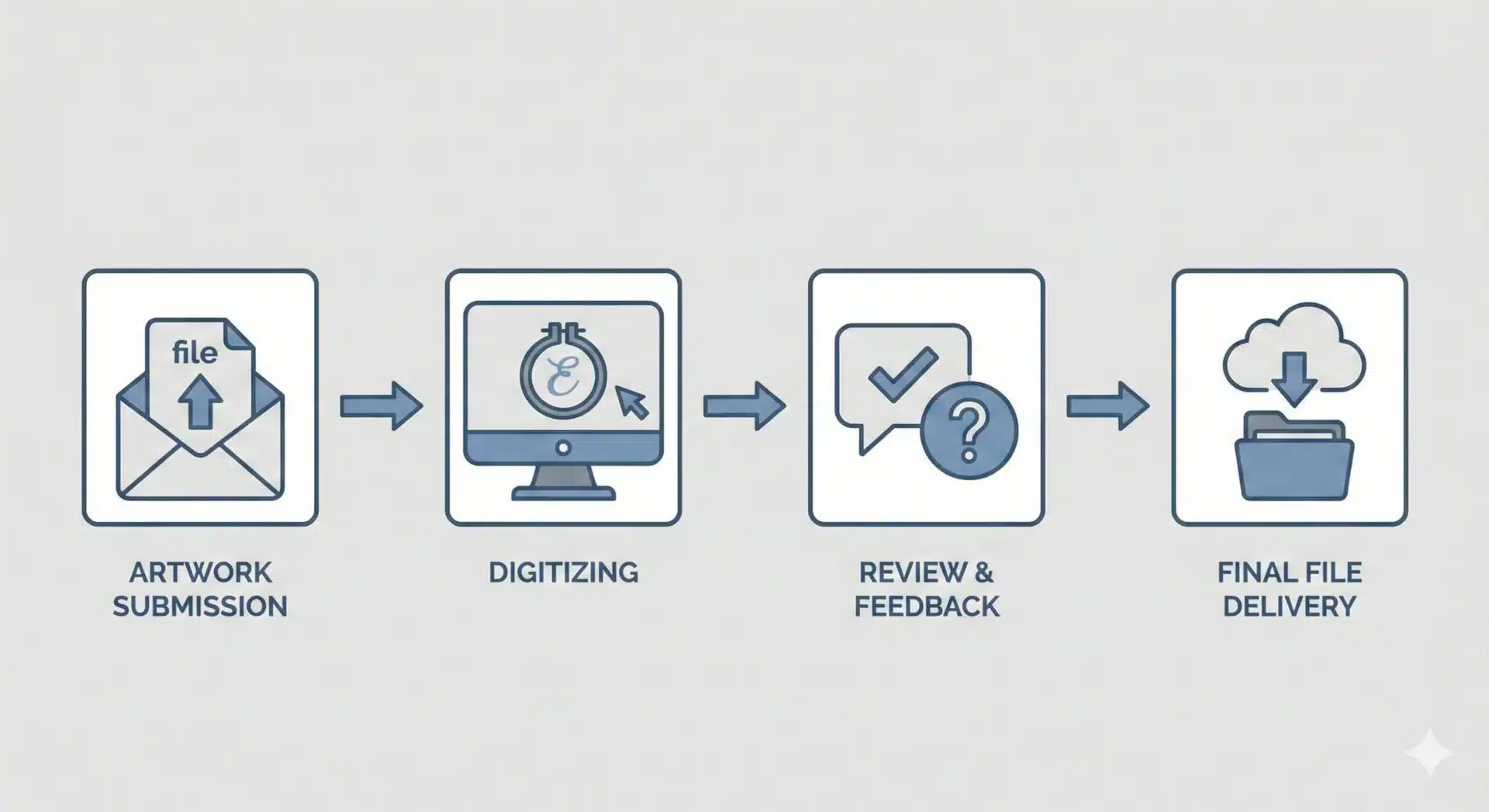
File Compatibility and Format Support
Production depends on correct file formats.
Support for Multiple Machine Formats
A reliable digitizing service provides files compatible with different embroidery machines, such as DST, PES, EMB, JEF, and EXP.
Incorrect formats can cause stitching errors or machine rejection.
Providing Editable and Production Files
Professional services maintain working files for future edits and scaling. This saves time when changes are needed later.
Warning Signs of Poor Digitizing Services
Recognizing red flags helps avoid costly mistakes.
Extremely Low Pricing With Unrealistic Promises
Very low prices often mean rushed or automated digitizing. Quality digitizing requires time and expertise.
Lack of Production Knowledge
Services that focus only on visual appearance and ignore stitch behavior often lack real embroidery experience.
Why EmbroiPlanet Is a Reliable Digitizing Partner ?
EmbroiPlanet follows professional digitizing standards.
100% Manual Embroidery Digitizing
All designs are digitized manually with attention to stitch engineering, fabric behavior, and production reliability. No automated shortcuts are used.
Production-Focused Quality Approach
Each design is created to perform smoothly during embroidery, reducing machine downtime and fabric waste.
Clear Communication and Global Support
EmbroiPlanet supports international clients with clear communication, compatible file formats, and consistent quality.
Contact Methods
You can contact EmbroiPlanet via:
You can contact EmbroiPlanet through:
Email – [email protected]
Instagram Direct Message – https://www.instagram.com/embroiplanet
Final Thoughts on Choosing the Right Digitizing Service
Choosing the right embroidery digitizing service affects more than just file quality—it impacts production efficiency, cost control, and brand consistency. Low-quality digitizing often leads to repeated issues that increase expenses over time.
By selecting a professional, manual digitizing service like EmbroiPlanet, businesses can achieve reliable embroidery performance, reduce production risks, and maintain consistent quality across all projects.
Why Using the Same Digitized File for Different Garments Can Cause Embroidery Issues ?
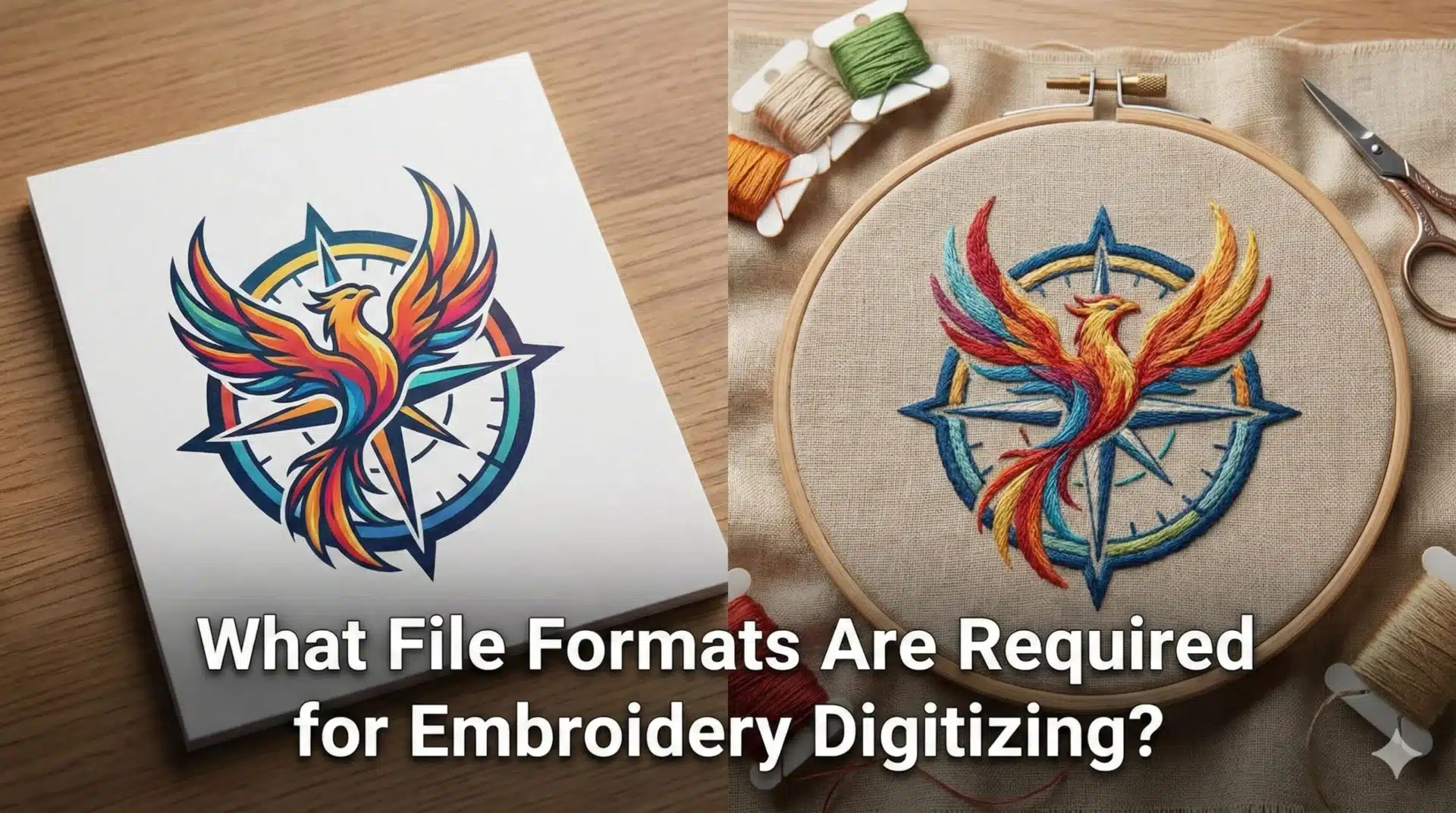
What File Formats Are Required for Embroidery Digitizing?
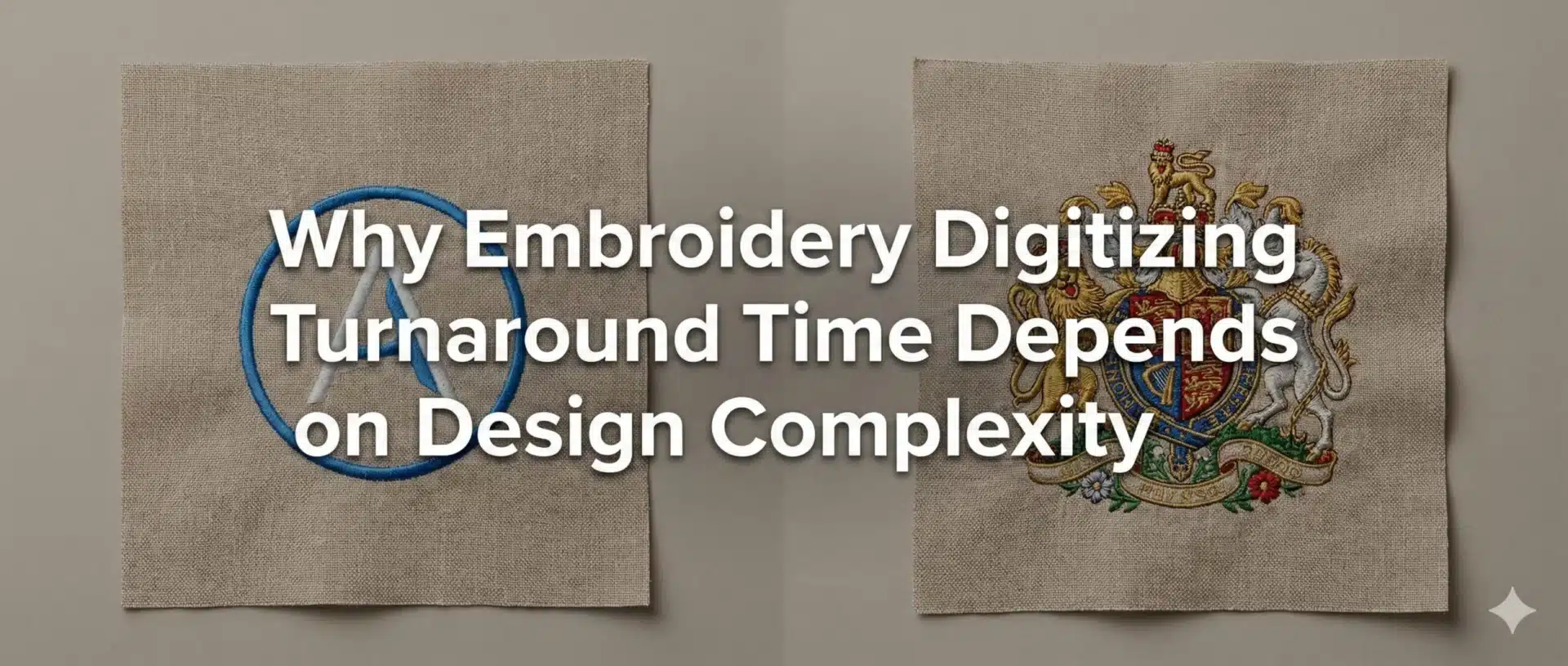
Why Embroidery Digitizing Turnaround Time Depends on Design Complexity ?