






























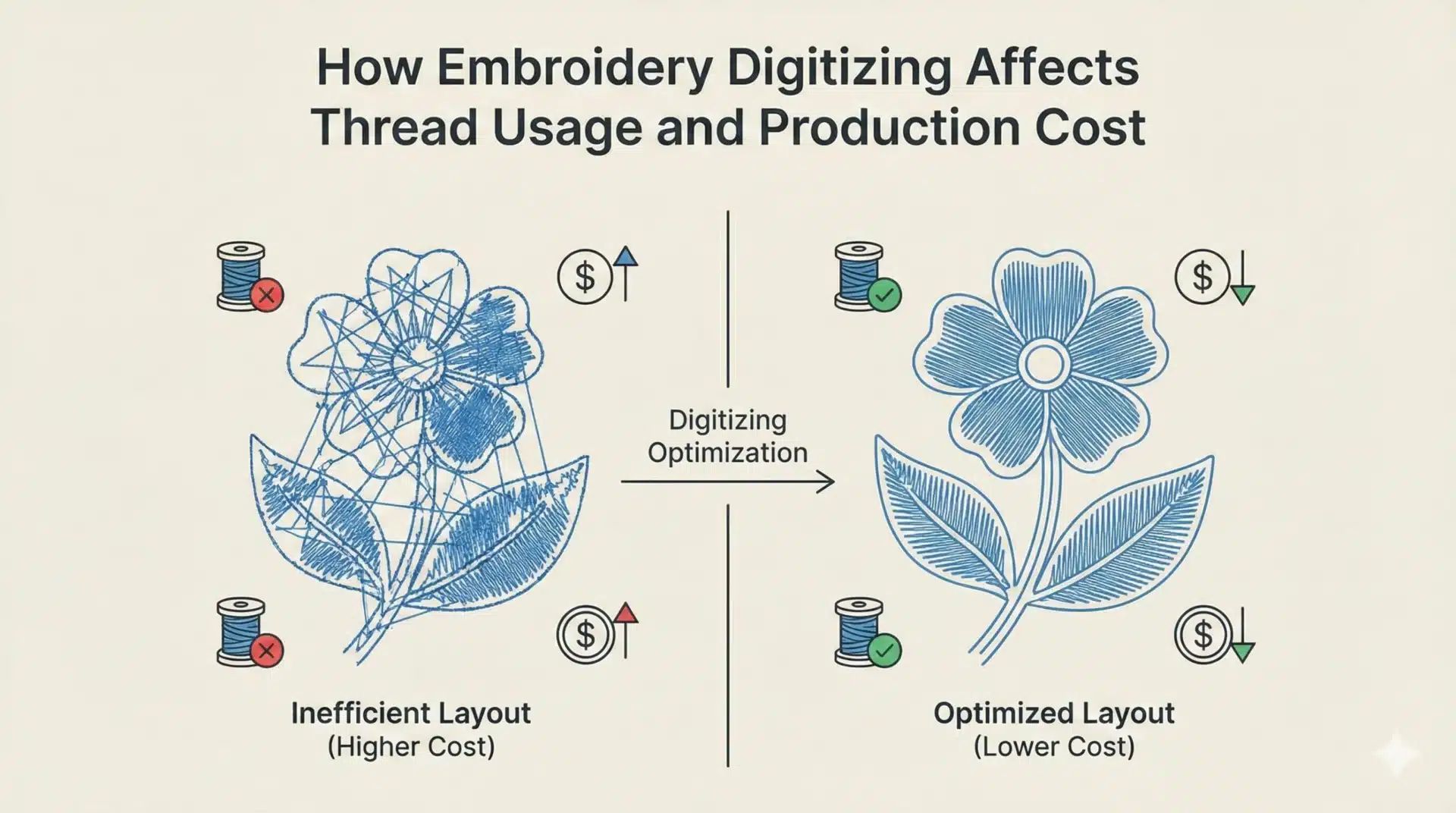
In embroidery production, thread usage directly impacts cost and efficiency. Many businesses overlook how embroidery digitizing influences the amount of thread consumed during stitching. Poor digitizing often results in excessive stitch counts, unnecessary trims, and inefficient stitch paths, which increase thread usage and production expenses.
For embroidery businesses and clothing brands, understanding how digitizing affects thread consumption helps improve cost control and production efficiency. This blog explains how professional digitizing optimizes thread usage and reduces material waste.
Why Thread Usage Depends on Digitizing Quality ?
Digitizing determines how stitches are placed during embroidery.
Stitch Count Affects Thread Consumption
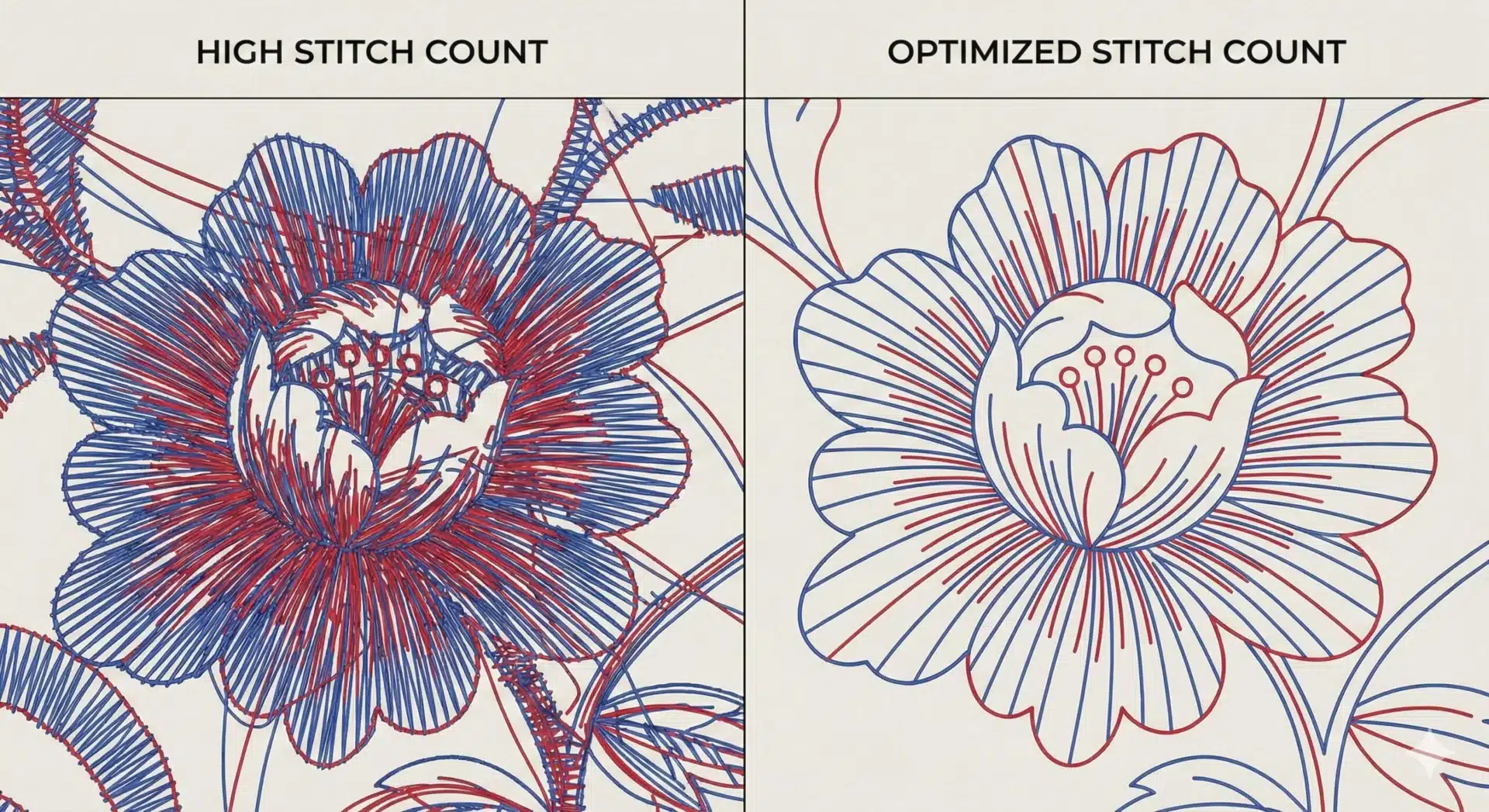
Each stitch added to a design increases thread usage. Poor digitizing often includes unnecessary stitches, especially in fill areas or outlines. These extra stitches may not improve appearance but significantly increase thread consumption over time.
Reducing unnecessary stitch count helps lower material costs.
Efficient Stitch Paths Reduce Thread Waste
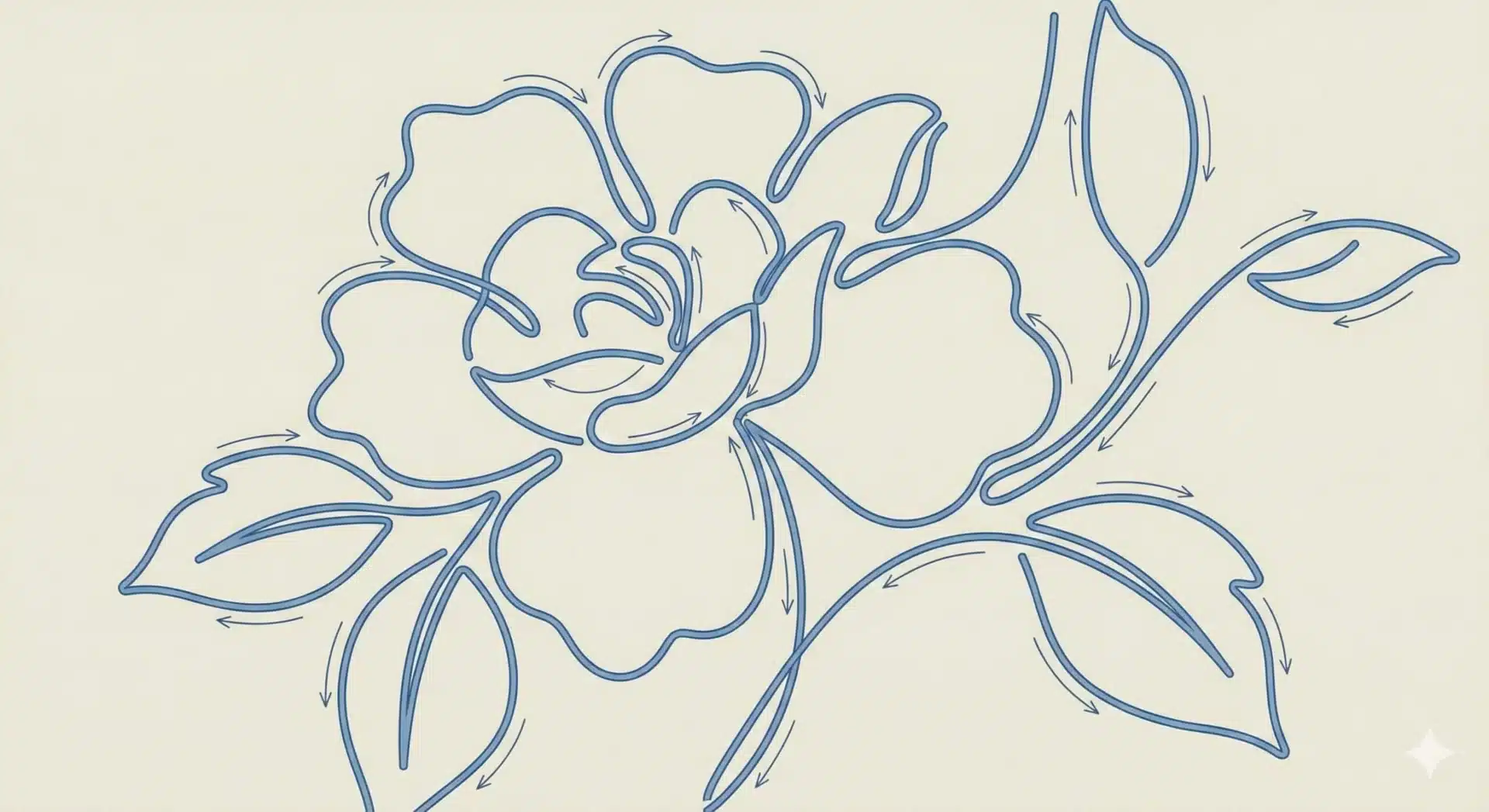
When stitch paths are poorly planned, machines may create overlapping stitches or inefficient travel paths. This increases thread usage without improving embroidery quality.
Efficient stitch planning minimizes excess thread usage.
The Cost Impact of Excessive Stitch Density
Density influences thread consumption.
Overly Dense Designs Use More Thread
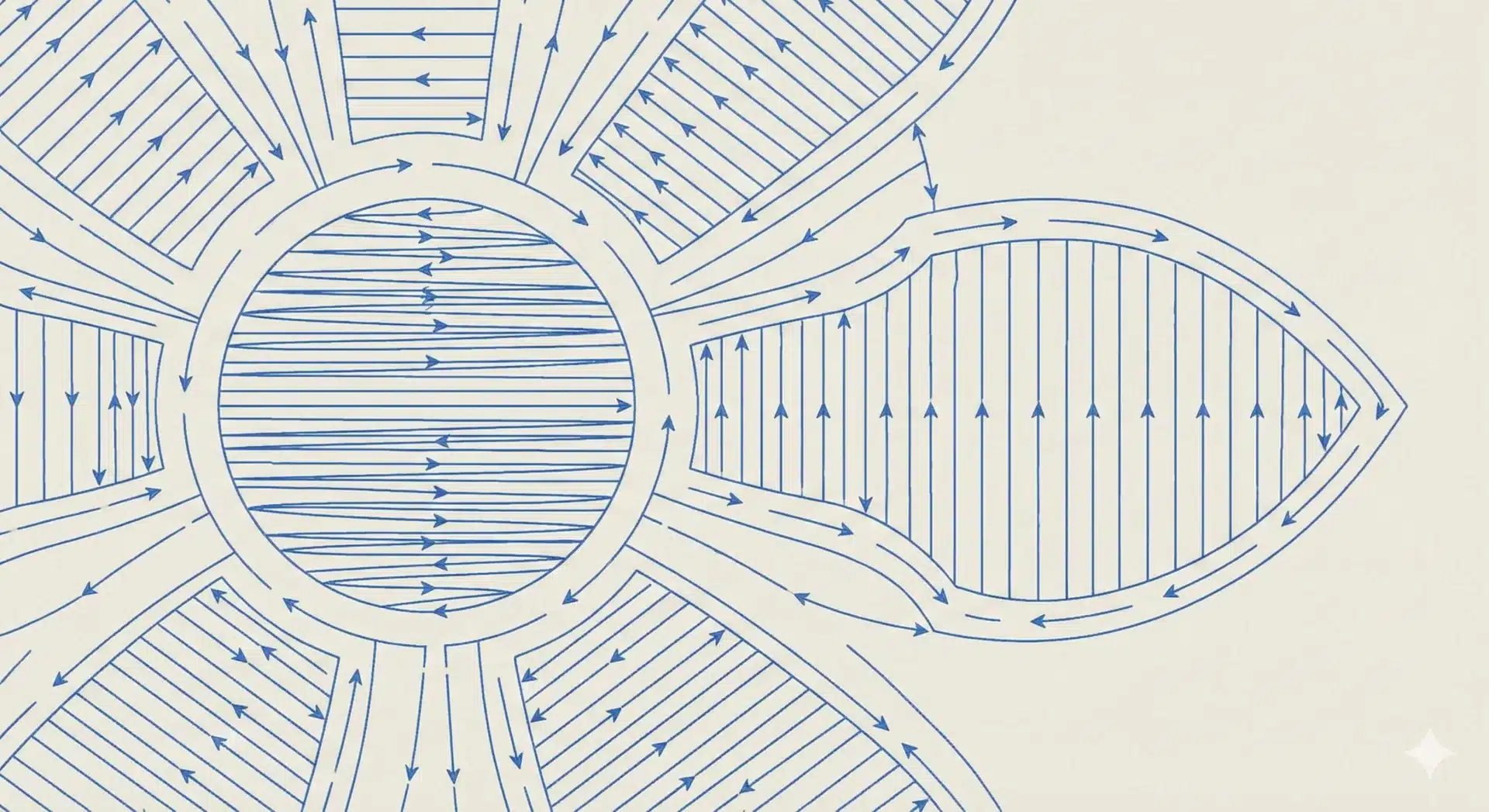
High stitch density increases the number of stitches required to fill an area. This leads to higher thread consumption and may also slow down machine speed.
Balanced density ensures efficient thread usage.
Correct Density Maintains Quality Without Waste
Proper density provides adequate coverage without unnecessary stitches. This helps maintain embroidery quality while minimizing thread usage.
How Poor Sequencing Increases Thread Waste ?
Sequencing affects stitch flow.
Unnecessary Jump Stitches
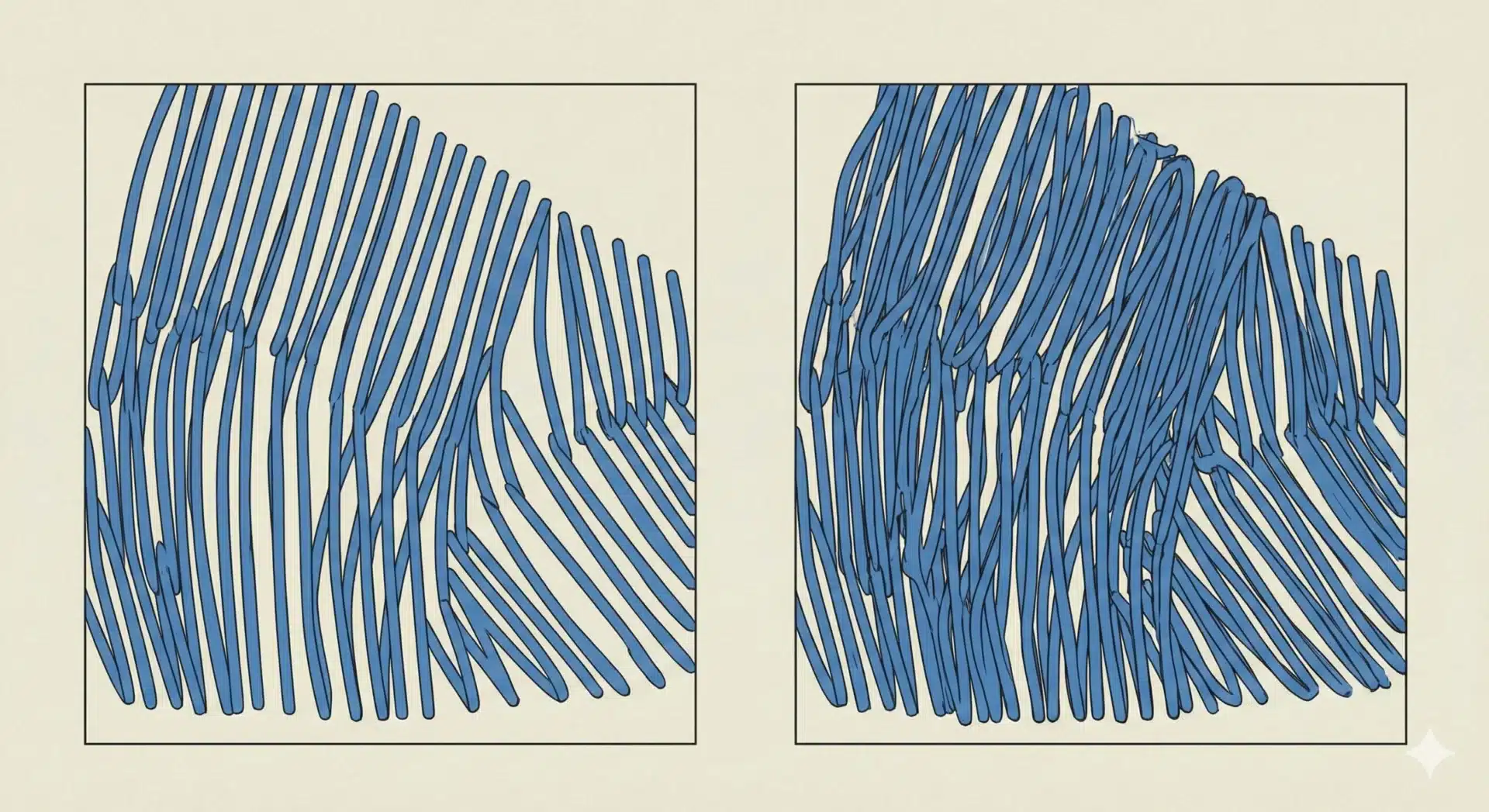
Poor sequencing may cause the machine to create jump stitches between sections. These jumps increase thread usage and may require trimming.
Reducing jump stitches helps conserve thread.
Excessive Trims Increase Material Loss
Frequent trims require extra thread to secure stitches. This increases material usage and production time.
Efficient sequencing improves cost control.

How Professional Digitizing Optimizes Thread Usage ?
Manual digitizing improves efficiency.
Controlled Stitch Engineering
Manual digitizers plan stitch count carefully to balance coverage and thread usage. This prevents unnecessary stitches.
Optimized Fill Patterns
Efficient fill patterns reduce stitch count without compromising appearance.
Long-Term Benefits of Efficient Digitizing
Efficient files improve production economics.
Reduced Material Cost
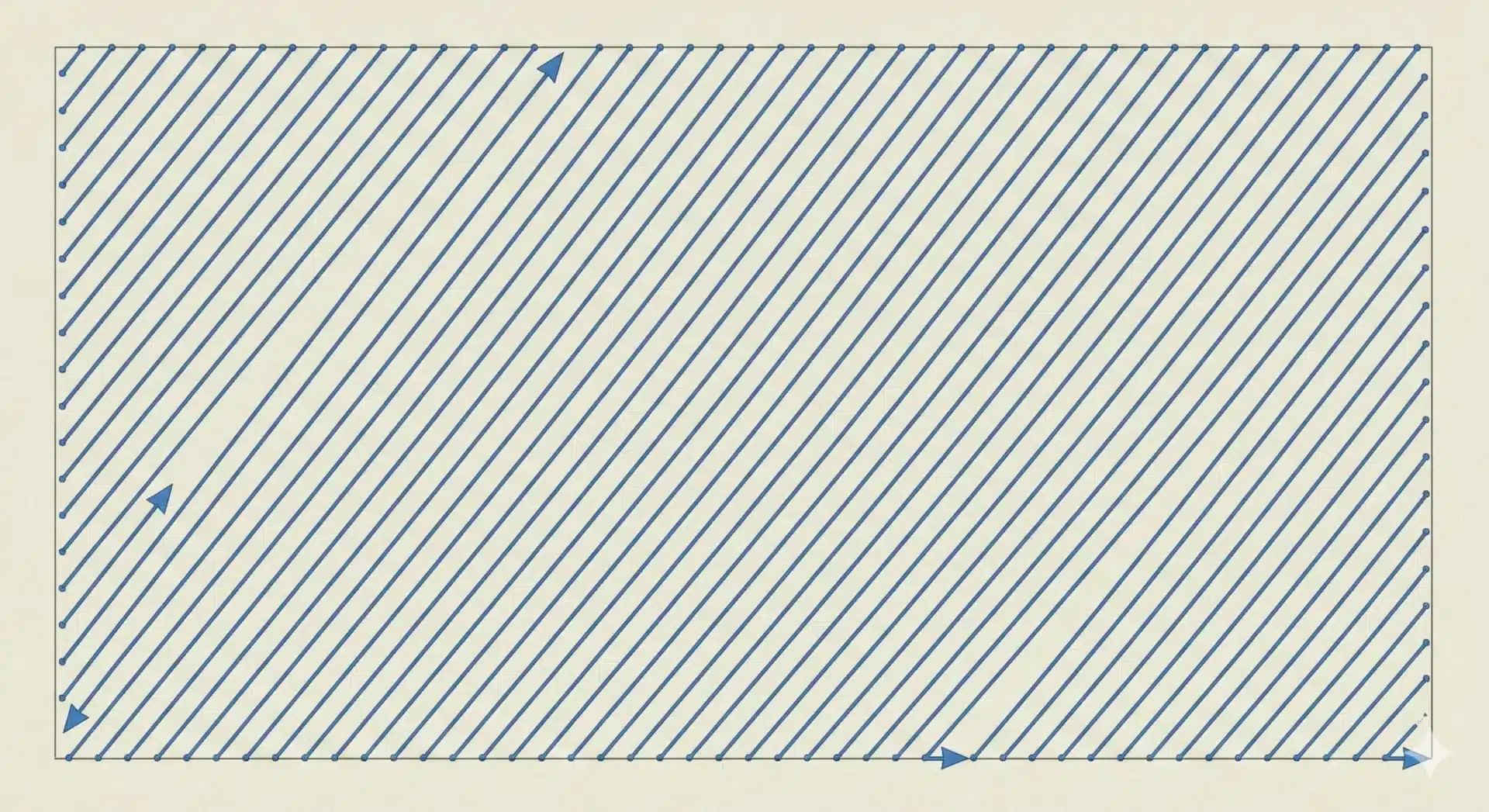
Optimized stitch layouts reduce thread usage across bulk production runs.
Improved Production Speed
Fewer stitches also reduce embroidery time.
How EmbroiPlanet Minimizes Thread Waste ?
EmbroiPlanet focuses on production-focused digitizing.
Balanced Density and Stitch Planning
Each design is optimized for efficient thread usage.
Performance-Focused Digitizing Approach
Files are engineered for cost-effective production.
Contact Methods
You can contact EmbroiPlanet via:
You can contact EmbroiPlanet through:
Email – [email protected]
Instagram Direct Message – https://www.instagram.com/embroiplanet
Final Thoughts on Digitizing and Thread Usage
Embroidery digitizing significantly affects thread consumption and production cost. Poor digitizing increases stitch count and material waste, while professional manual digitizing improves efficiency and cost control.
EmbroiPlanet provides digitizing services designed to optimize production performance and reduce material usage.

Why Using the Same Digitized File for Different Garments Can Cause Embroidery Issues ?

What File Formats Are Required for Embroidery Digitizing?
Why Embroidery Digitizing Turnaround Time Depends on Design Complexity ?