

























Why Redigitizing Old Embroidery Designs Saves Time, Money, and Production Costs
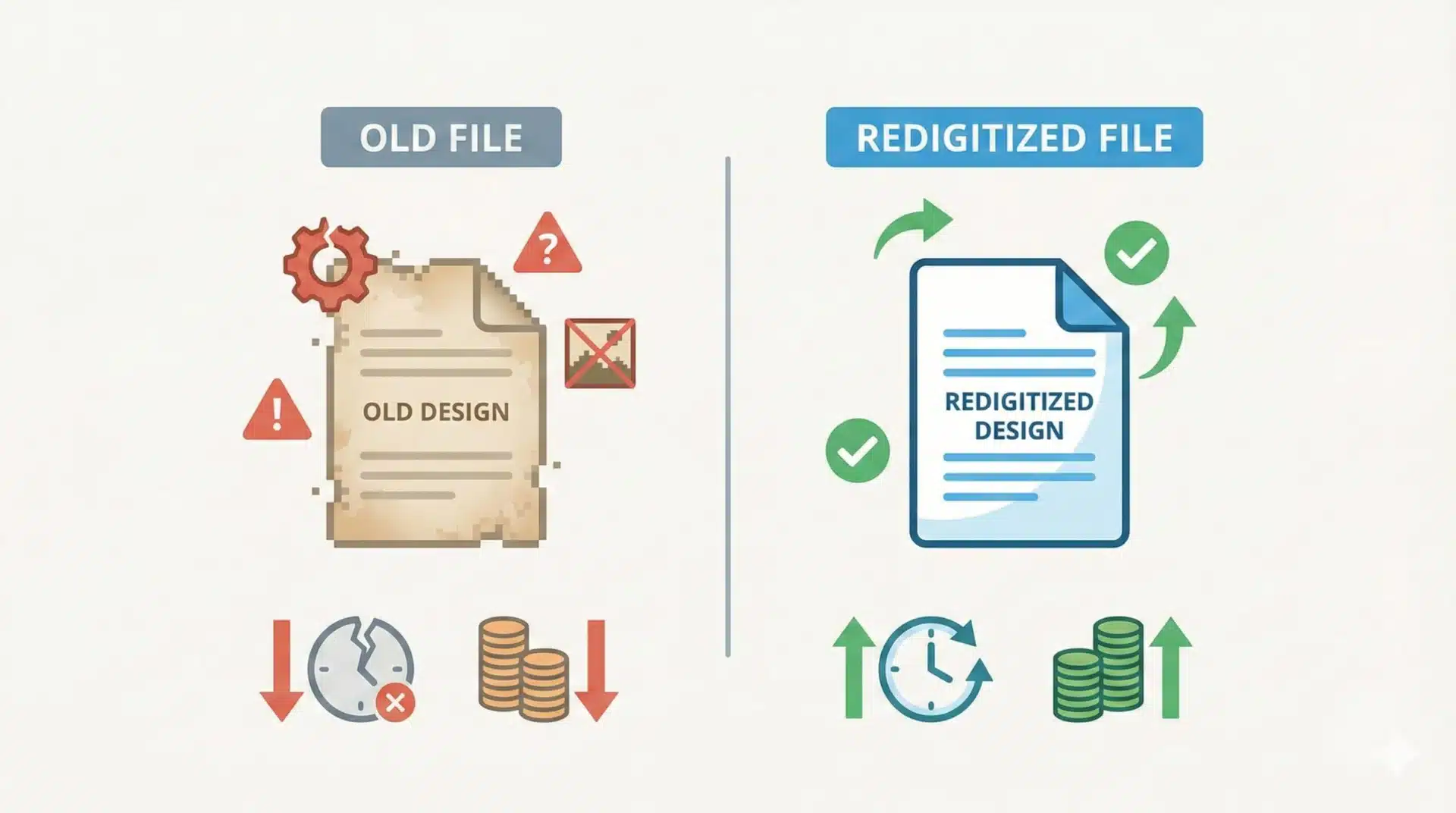
Many embroidery businesses, clothing brands, and machine owners continue using old embroidery files without realizing that these designs may be costing them time, money, and production efficiency. While an old digitized file may appear usable, changes in fabric types, machine technology, and production requirements often make redigitizing a necessary step for maintaining embroidery quality.
At EmbroiPlanet, we regularly work with clients who experience recurring embroidery problems caused by outdated digitized files. This article explains why redigitizing old embroidery designs can significantly reduce production costs and improve overall embroidery performance.
What Does Redigitizing Mean in Embroidery ?
Redigitizing is the process of recreating an embroidery design from original artwork or references instead of modifying an existing stitch file.
Difference Between Editing and Redigitizing
Editing involves making small adjustments to an existing digitized file, while redigitizing rebuilds the design from the ground up. When a file is outdated or poorly structured, redigitizing provides better long-term results than repeated edits.
Why Old Files Become Inefficient Over Time ?
Older digitized files may not account for modern fabrics, higher machine speeds, or current production standards. As production environments evolve, digitizing methods must adapt accordingly.
Common Problems Caused by Using Old Digitized Files
Many production issues originate from outdated digitizing rather than machine faults.
Increased Thread Breaks and Machine Stops
Old files often use excessive stitch density or outdated stitch sequencing, leading to frequent thread breaks and production downtime.
Fabric Puckering and Distortion
Changes in fabric types or garment construction can cause old stitch structures to perform poorly, resulting in puckering and shape distortion.
Inconsistent Stitch Quality
Designs may stitch differently across machines or production batches due to outdated stitch engineering.
How Redigitizing Improves Production Efficiency ?
Redigitizing focuses on optimizing designs for current production conditions.
Updated Stitch Density and Direction
Modern digitizing techniques adjust stitch density and direction to reduce tension and improve fabric stability.
Optimized Underlay Structures
Redigitizing allows underlay stitches to be rebuilt based on current fabric behavior, improving support and durability.
Reduced Machine Stress
Well-planned stitch paths reduce unnecessary trims and jumps, improving machine efficiency and reducing wear.
Cost Benefits of Redigitizing Old Designs
Although redigitizing may seem like an added expense, it often results in long-term cost savings.
Reduced Material Waste
Fewer thread breaks and mis-stitches mean less fabric waste and fewer rejected garments.
Faster Production Time
Efficient digitized files reduce machine stops and rework, allowing faster order completion.
Lower Maintenance Costs
Optimized stitch files reduce stress on needles, threads, and machine components, lowering maintenance expenses.
When Redigitizing Is Recommended ?
Not every design requires redigitizing, but certain situations strongly benefit from it.
Switching Fabric Types or Garment Styles
A design digitized for caps may not perform well on stretch fabrics or lightweight garments.
Scaling Designs to Different Sizes
Scaling old stitch files can distort density and shape. Redigitizing ensures proper stitch balance at new sizes.
Persistent Production Issues
If a design consistently causes thread breaks, puckering, or distortion, redigitizing is often the most effective solution.
Redigitizing vs Repeated Revisions
Understanding the difference helps businesses make better decisions.
Limitations of Continuous Editing
Repeated small edits cannot fix fundamental structural issues in poor digitizing.
Long-Term Stability Through Redigitizing
Redigitizing resolves root problems instead of applying temporary fixes.
How Professional Digitizing Ensures Better Redigitizing Results ?
Professional digitizers analyze designs beyond visual appearance.
Stitch Engineering Based on Fabric Behavior
Redigitized files are built with fabric interaction and stitch behavior in mind.
Machine Compatibility Optimization
Files are optimized for current machine models and production speeds.
Quality Control Before Delivery
Each redigitized design undergoes internal checks to ensure production readiness.
How EmbroiPlanet Handles Redigitizing Projects ?
EmbroiPlanet specializes in embroidery digitizing and redigitizing for global clients.
Design Review and Performance Analysis
We analyze existing designs to identify structural issues affecting production.
Rebuilding Designs for Modern Production
Redigitized files are built using updated stitch techniques and best practices.
Affordable and Transparent Services
Our pricing structure ensures high-quality digitizing without unnecessary costs.
How to Request Redigitizing Services From EmbroiPlanet ?
Getting started is simple and fully online.
What to Provide
Clients should share:
- Original artwork or reference files
- Existing embroidery file (if available)
- Fabric type and garment details
- Machine file format requirements
Contact Methods
You can contact EmbroiPlanet via:
You can contact EmbroiPlanet through:
Email – [email protected]
Instagram Direct Message – https://www.instagram.com/embroiplanet
Final Thoughts on Redigitizing Old Embroidery Designs
Using outdated digitized files can silently increase production costs and reduce embroidery quality. Redigitizing allows businesses to modernize stitch structures, improve machine efficiency, and achieve consistent embroidery results.
By investing in professional redigitizing services, embroidery businesses and brands can reduce errors, save time, and maintain high production standards. EmbroiPlanet provides expert embroidery digitizing and redigitizing services designed to support efficient and reliable embroidery production worldwide.
About Embroiplanet

Latest Posts

Why Embroidery Digitizing Requires Different Settings for Caps vs Flat Garments ?
Why Small Text Is Challenging in Embroidery Digitizing ?